
How to Start a Fitness Program and Actually Stick to It
The best way to start working out is to fix the order of operations: lock in a realistic schedule first, pick one small workout you can repeat, then let the plan grow as the habit sticks. Most people do this backward, chasing a perfect program before they have proven they will actually show up, and they burn out inside two weeks. Start smaller than feels impressive, protect a couple of set times each week, and build from there.
- Fitness is a schedule problem before it is an exercise problem. Decide when and where you will train before you fuss over which exercises to do.
- Start with 2 to 3 short sessions a week, 20 to 30 minutes each. Consistency you can keep beats a perfect plan you abandon.
- Anchor each workout to something already fixed in your day, and decide your bad-week minimum in advance so a rough week bends your streak instead of breaking it.
- Protein, consistent sleep, and a daily walk do more for a beginner than any advanced routine. Add a little strength work to hold on to muscle.
- Track one simple thing (did I train today, yes or no) and take a day-zero snapshot so you can actually see progress in a few weeks.
The order of operations most people get wrong
Most beginners start with the workout itself: the split, the exercise list, the app with the fancy graphs. When you are starting from zero, that is the last thing that matters. The first thing that matters is whether you can reliably get yourself to a session at all.
The order that actually works is simple. First, decide when and where you will train. Second, choose one basic session you can repeat without thinking. Third, just show up for two weeks before you change a single thing. Fitness is a schedule problem before it is an exercise problem.
When you fix the schedule first, the workout almost picks itself. When you fix the workout first, one busy week wipes out your momentum and the whole plan quietly dies. Get the order right and everything after it gets easier.
Start smaller than feels impressive
The smallest first step is the one you cannot talk yourself out of. For most people that is two or three short sessions a week, 20 to 30 minutes each, built around a few basic movements. It should feel almost too easy at first. That is the point.
A beginner session can be as plain as a brisk walk plus a round of bodyweight squats, push-ups (or wall push-ups if those are hard right now), and a plank. You do not need a gym membership, special gear, or a complicated program to begin today.
Research generally shows that for beginners, consistency beats intensity by a wide margin. Three ordinary workouts you actually finish will do far more than a perfect five-day plan you quit by Thursday. Impressive plans are easy to write and hard to keep.
Build the week before you build the workout
Open your calendar and pick specific slots, not vague intentions. "Monday, Wednesday and Friday at 6am" beats "I will work out more" every time, because a real time on a real day is something you can either keep or reschedule, not just hope for.
Attach each session to something already fixed in your day: before your morning shower, right after you drop the kids at school, or on your lunch break. Anchoring a new habit to an existing one makes it much easier to remember and much harder to skip.
Plan for the bad week too, because it is coming. Decide in advance what your minimum counts as, maybe a single 15-minute walk, so a hectic week bends your streak instead of snapping it. Never missing twice in a row matters more than any perfect week.
Nail the boring basics that beat any fancy plan
Protein, sleep, and daily movement do more for a new lifter than any advanced routine ever will. Aim to include a protein source at each meal, keep a consistent bedtime, and add a daily walk.
Muscle matters more than most beginners realize. Inactive adults lose roughly 3 to 8% of muscle per decade after 30, and simple resistance training is one of the best ways to hold on to it. A couple of short strength sessions a week is enough to start building that habit.
Before you begin a new program or add any supplement, talk to your physician, especially if you have a health condition, take medication, or have been inactive for a long stretch. This is general wellness guidance and not medical advice, so let a professional weigh in on your situation.
Track one simple thing
Pick a single metric you can log in seconds: did I train today, yes or no. A row of checkmarks is more motivating than a detailed spreadsheet you will stop updating by week three. Keep the scoreboard so easy that skipping it is not an option.
Take a day-zero snapshot before you get going: a photo, your weight, or how many push-ups you can do in a row. Progress is easy to feel and surprisingly easy to forget, so give yourself a clear baseline to compare against a few weeks from now.
Expect the first two weeks to feel awkward. Some soreness, a missed day here and there, and slow-looking progress are all normal. Early on, the goal is not results. It is proof to yourself that you have become someone who shows up when it is time to train.
When accountability makes the difference
Some people can self-start and stay consistent entirely on their own. Many cannot, and that is not a character flaw, it is just how habits tend to work. A coach, a small group, and a set time on the calendar quietly remove most of the daily decisions that lead to skipping.
That is the idea behind the coached 6-week programs at White Gorilla Fitness. Small groups kept deliberately small, session times in the morning, midday and evening, daily meal-photo feedback, and weekly one-on-one check-ins mean you are never guessing or going it alone during the weeks that matter most.
Whether you join a program or start solo,, or anywhere nearby, the principle holds: fix the schedule, start smaller than feels impressive, and let a little accountability carry you through the days when motivation runs low.
Frequently asked questions
How often should a beginner work out?
Two to three days a week is plenty to start, with 20 to 30 minutes per session. That is enough to build the habit and see early progress without overwhelming your schedule or your recovery. You can add a fourth day later once showing up consistently feels automatic, but do not rush it. A routine you keep beats a bigger plan you abandon.
Do I need a gym to start working out?
No. You can start at home with bodyweight movements like squats, push-ups or wall push-ups, planks, and a brisk daily walk. A gym or coached program adds equipment, structure, and accountability, which help a lot once you are ready to progress, but they are not required to begin. The most important first step is picking set times and showing up, which you can do anywhere.
How long until I see results?
Most people notice they feel better, sleep better, and have more energy within the first couple of weeks, well before the mirror or the scale changes much. Visible changes usually take longer and depend on your starting point, consistency, sleep, and nutrition. Focus on your streak of completed workouts in the early weeks, since that is the input that eventually drives the results you want.
What should my first workout ever look like?
Keep it simple: a 10 to 15 minute brisk walk to warm up, then a few rounds of bodyweight squats, push-ups or wall push-ups, and a short plank hold, resting as needed. Aim to finish feeling like you could have done a little more rather than completely wiped out. The goal of session one is to prove you can start and repeat it, not to exhaust yourself.
Is it safe to start if I have been inactive for years?
Many people who have been inactive for a long time can begin with gentle walking and light bodyweight movement, progressing slowly. That said, talk to your physician before you start, especially if you have a health condition, take medication, or have any concerns. This is general wellness guidance, not medical advice, and a quick check-in lets you begin with confidence and a plan suited to you.
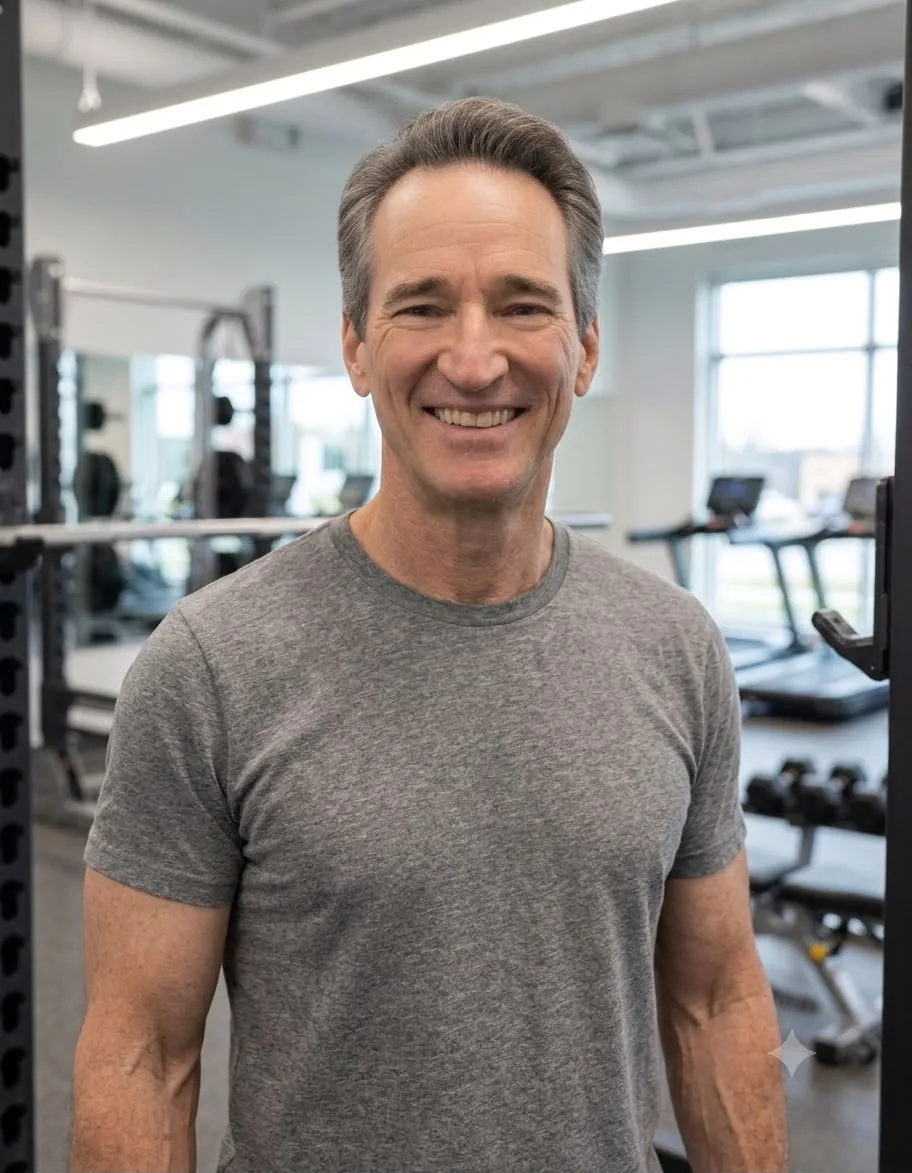
Coach Clay
Clay is the head coach at White Gorilla Fitness and has spent years coaching everyday adults, including a large over-50 community, through strength, mobility and getting back to moving well. He writes the programming behind Silverback Strong Online and filmed the movement library it runs on.