
Small-Group Coaching vs Personal Training: Which Is Better?
Small-group training and personal training both work, but they win on different things. Personal training gives you the most individual attention and a fully custom plan, usually at a higher price. Small-group coaching gives you most of that structure and expert eyes on your form for a lower cost per session, plus built-in accountability from people training alongside you. The better choice comes down to your budget, how much one-on-one attention you actually need, and whether a little friendly peer pressure helps you show up. Here is a honest breakdown so you can pick with clear eyes.
- Personal training buys you the most individual attention and the most customized plan, but it costs the most per session.
- Small-group coaching lowers the cost per session and adds peer accountability, while still giving you a coach who watches your form.
- Choose personal training if you have a specific injury, a competition goal, or you simply need undivided attention to feel confident.
- Choose small-group coaching if you want structure, results, and community without paying premium one-on-one rates.
- You do not have to pick forever. Many people start in a group, then add private sessions only when they hit a specific need.
The real cost difference (and what you get for it)
Personal training is the priciest option per session because you are buying a coach's undivided time. In most US markets, one-on-one sessions run well above what the same coach charges for a small group, and the gap adds up fast if you train several times a week. You pay for exclusivity: the whole hour, and the whole plan, is about you.
Small-group coaching splits a coach's time across a handful of people, so the cost per person drops sharply while you still get expert coaching. You are not getting a big-box gym floor with one trainer for thirty people. In a capped small group, the coach still knows your name, your goals, and your form.
At White Gorilla Fitness, our coached challenges run as small groups kept deliberately small for one flat payment, with no membership and no auto-renewal. That structure is built to give you close coaching at a group price rather than forcing you to choose between attention and affordability.
Attention and personalization: where private wins
This is the honest strength of personal training. When it is just you and the coach, every set can be adjusted in real time, the program bends entirely around your schedule and history, and nothing gets missed. If you are coming back from a specific injury, training for a sport or an event, or you have limitations that need constant tailoring, that undivided attention is worth paying for.
Small-group coaching is more personalized than most people expect, but it is not one-on-one. A good coach programs for the group, then scales each movement up or down for the individual and corrects form throughout the session. For the large majority of people whose goal is losing weight, getting stronger, or moving better, that level of customization is plenty.
A quick honest note: if you have a health condition or a past injury, talk with your physician before starting any new program, and tell your coach so movements can be adjusted safely from day one. That is true in both settings.
Accountability: where the group quietly wins
Accountability is the hidden reason most people succeed or stall, and it is where small groups shine. When you train alongside the same faces each week, showing up stops being optional. You notice when someone is missing, and they notice you. That social pull is hard to manufacture in a solo session where the only person who knows you skipped is your trainer.
Good coaching adds structure on top of the peer effect. Our programs pair the group setting with daily meal-photo coaching and weekly one-on-one check-ins, so you get private accountability and group energy at the same time. Progress assessments on day 0, 21, and 42 keep the results honest and visible.
Personal training has accountability too, since your coach is expecting you. But it leans entirely on that one relationship. If you are the type who trains harder when others are in your program, a group can carry you through the weeks when motivation dips.
Who each option actually suits
Pick personal training if you need undivided attention to feel safe or confident, if you are rehabbing a specific issue with your physician's guidance, if you have a competition or a precise performance target, or if your schedule is so unpredictable that only fully custom timing works. You are paying more, but for those situations it earns its price.
Pick small-group coaching if your main goal is losing weight, building general strength, or moving and feeling better, and you want expert structure without premium one-on-one rates. It is also the better fit if accountability is your sticking point, because the group and the check-ins do a lot of the heavy lifting for you.
Age and life stage matter too. Adults 45 and up often do best with coaching that emphasizes strength, mobility, and balance in a supportive group, which is exactly why we built Silverback Strong. Research generally shows inactive adults lose roughly 3 to 8% of muscle per decade after 30, so structured strength work with a coach watching your form becomes more valuable, not less, as the years add up.
How to decide without overthinking it
Start with your honest constraint. If budget is the wall, small-group coaching gives you the most results per dollar. If your situation genuinely demands custom attention every session, personal training is worth the premium. Most people land in the group, and that is not a compromise so much as the right default.
You are also not locked in for life. A common and smart path is to run a coached group program, then add a few private sessions only when you hit a specific need, like nailing a lift you find intimidating or working around a tender shoulder. Use private time surgically instead of paying for it by default.
If you are and want to try the group route, our 6-week coached challenges include a money-back scoreboard guarantee: do the work for six weeks or every dollar comes back. Sessions run at 6 and 7am, 11am and noon, and 6 and 7pm, so there is room around most work schedules. That kind of guarantee only makes sense when the coaching and accountability are built to actually work.
Frequently asked questions
Is small-group training as effective as personal training?
For most common goals like weight loss, general strength, and better mobility, yes. In a capped small group, a coach still watches your form, scales each movement to your level, and holds you accountable. Personal training pulls ahead when you need undivided attention every session, such as rehabbing a specific injury with your physician's guidance or training for a precise competition target. For the majority of people, a well-run small group delivers comparable results at a lower cost per session.
How much cheaper is small-group training than personal training?
The exact numbers vary by market and coach, but the pattern is consistent: because a small group splits the coach's time across several people, the cost per session is substantially lower than one-on-one rates. You trade some individual attention for a meaningful drop in price while still getting expert coaching. At White Gorilla Fitness, our coached 6-week challenges are one flat payment with no membership and no auto-renewal, which keeps the total cost clear up front.
Which is better for a total beginner?
Small-group coaching is often ideal for beginners. You get a coach correcting your form and a built-in community that makes showing up easier, without the higher price of private sessions. Beginners also benefit from seeing others at different levels, which normalizes the learning curve. If you feel anxious training around others or have a specific medical concern, a few personal sessions to build confidence first can help, then you can move into a group. Check with your physician before starting any new program.
Can I combine small-group and personal training?
Yes, and many people do. A smart approach is to run a coached group program for structure and accountability, then add occasional private sessions only when you hit a specific need, like mastering a lift you find intimidating or working around a nagging injury. This keeps your overall cost down while still giving you custom attention exactly where it matters most, rather than paying premium rates for every session.
Does small-group training work for adults over 45?
It works very well. Adults 45 and up often thrive with group coaching that emphasizes strength, mobility, and balance in a supportive setting. Research generally shows inactive adults lose roughly 3 to 8% of muscle per decade after 30, so structured strength work with a coach watching your form becomes more important with age, not less. Our Silverback Strong program was built specifically for this. As always, talk with your physician before beginning a new routine.
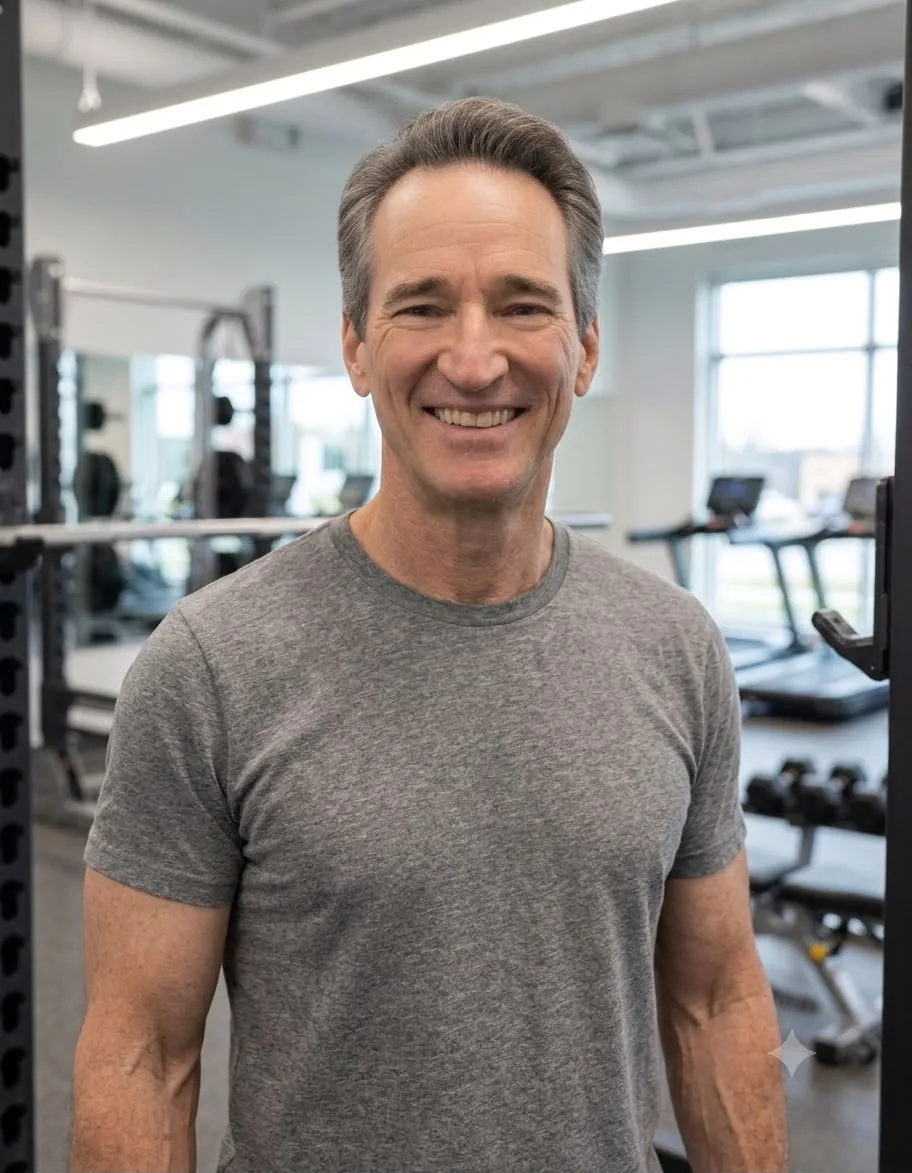
Coach Clay
Clay is the head coach at White Gorilla Fitness and has spent years coaching everyday adults, including a large over-50 community, through strength, mobility and getting back to moving well. He writes the programming behind Silverback Strong Online and filmed the movement library it runs on.