
Why We Cap Cohorts at 20
We cap every cohort at 20 people because that is the largest group where one coach can still know your name, watch your form on most reps, and adjust your plan the same week you need it. The small group fitness benefits that matter most, real attention, accountability, and fast feedback, start to disappear the moment a room gets crowded. At White Gorilla Fitness, 20 is simply the number that keeps coaching personal.
- Capping cohorts at 20 keeps coaching personal: each person gets real minutes of attention instead of a coach managing a crowd.
- The biggest small group fitness benefits are attention, accountability, and fast feedback, and all three shrink as a room fills up.
- A coach who knows your name can adjust your plan to your body, catch form issues early, and notice when you miss a session.
- Off the floor coaching (daily meal photos, weekly check-ins, and progress assessments on day 0, 21, and 42) only stays personal with a small roster.
- White Gorilla Fitness runs six daily session times, so a small cap never means fewer chances to train.
The coaching math behind a cap of 20
Coaching is a time budget, not a headcount. A single session runs about a hour. Split that hour across 20 people and each person still gets a few real minutes of a coach's eyes, hands, and cues. Split the same hour across 40 and those minutes get cut in half, so most people end up following along instead of being coached.
At White Gorilla Fitness we run six session times a day, 6 and 7am, 11am and noon, and 6 and 7pm, so the cap does not mean fewer chances to train. It means the group in front of Coach Clay stays small enough to actually coach. Once a room grows past 20, a coach stops teaching and starts crowd managing.
The cap also protects the parts of the program that happen off the floor: daily meal photo feedback, weekly one on one check-ins, and progress assessments on day 0, 21, and 42. Those only stay personal if the roster stays small.
Why the coach knowing your name changes outcomes
When a coach knows your name, they also know your history: the shoulder that clicks, the week you traveled, the goal you wrote down on day one. That context is what turns a generic workout into a plan that fits you. Anonymous rooms cannot do this, because nobody is tracking you specifically.
Being known also changes whether you show up. Research generally shows that people stick with new habits longer when they feel seen and expected. If Coach Clay notices you missed Tuesday, that is not surveillance, it is the accountability you paid for.
Most people underestimate how motivating it is to walk into a room where someone greets you by name and remembers what you are working on. That small human signal is one of the most underrated small group fitness benefits.
Attention per rep, and the mistakes small groups catch early
Form tends to break down quietly. A hip that shifts, a knee that caves, a back that rounds under load, these are easy to miss in a packed room and easy to catch when a coach is watching a group of 20 or fewer. Small groups let a coach correct the rep before a habit sets in.
This matters even more for adults over 45, which is who our Silverback Strong program serves. Strength, balance, and mobility all depend on clean movement, and clean movement depends on someone watching. Research generally shows that inactive adults lose roughly 3 to 8% of muscle per decade after 30, so the goal is to train consistently and well, not just often.
None of this is medical advice. If you have an injury, a health condition, or you are returning to exercise after a long break, talk to your physician before you start, and tell your coach so your plan can be adjusted around you.
Accountability that reaches you between sessions
The hour you spend training is a small slice of your week. What you eat, how you sleep, and what you do on the other days decides most of the result, and that is exactly where a small group earns its keep.
Every day, members send a quick photo of their meals and get real feedback, not a generic plan printed months ago. Once a week, you sit down one on one with your coach to look at what is working and adjust what is not. With 20 people, a coach can keep up with all of it. At 60, those messages go unread.
Local life is part of the plan too.
What a capped group gives you that a big gym cannot
A standard gym membership sells you access to equipment and hopes you figure out the rest. A capped coaching group sells you the opposite: a plan, a coach who knows you, and a group small enough that you are never just a number on a door assessment.
There is no membership, no auto renewal, and no month after month billing here. You make one payment for a coached online program, you do the work, and there is a money back scoreboard guarantee: put in the first month or every dollar comes back. That promise only works when the group is small enough for a coach to hold each person accountable.
That is the real reason the number is 20. It is the point where a group is big enough to push you and small enough to know you.
Frequently asked questions
What are the main small group fitness benefits?
The main benefits are individual attention, real accountability, and fast feedback. In a small group, a coach can watch your form on most reps, adjust your plan to your body and schedule, and notice quickly when you are off track. Those things get diluted as group size grows, which is why White Gorilla Fitness caps each cohort at 20.
Why cap the group at 20 specifically and not more?
Twenty is the largest group where one coach can still know each person by name, give meaningful attention every session, and keep up with daily meal photo feedback and weekly one on one check-ins. Past that number, coaching turns into crowd management. To keep spots available, the program runs six session times a day.
Will I still get personal attention if I am a total beginner?
Yes. A small cap exists partly so beginners get coached, not left to copy the person next to them. Coach Clay watches your movement, starts you at a load that fits you, and adjusts week to week. If you are new to exercise or returning after a break, talk to your physician first and let your coach know so your plan can be built around you.
Does a smaller group make it harder to get a spot or a session time?
Each cohort is kept deliberately small, so spots are limited and popular start dates do fill up. To balance that, there are six session times every day, 6 and 7am, 11am and noon, and 6 and 7pm, so you can train at a time that fits your day. Reaching out early is the best way to get the start date you want.
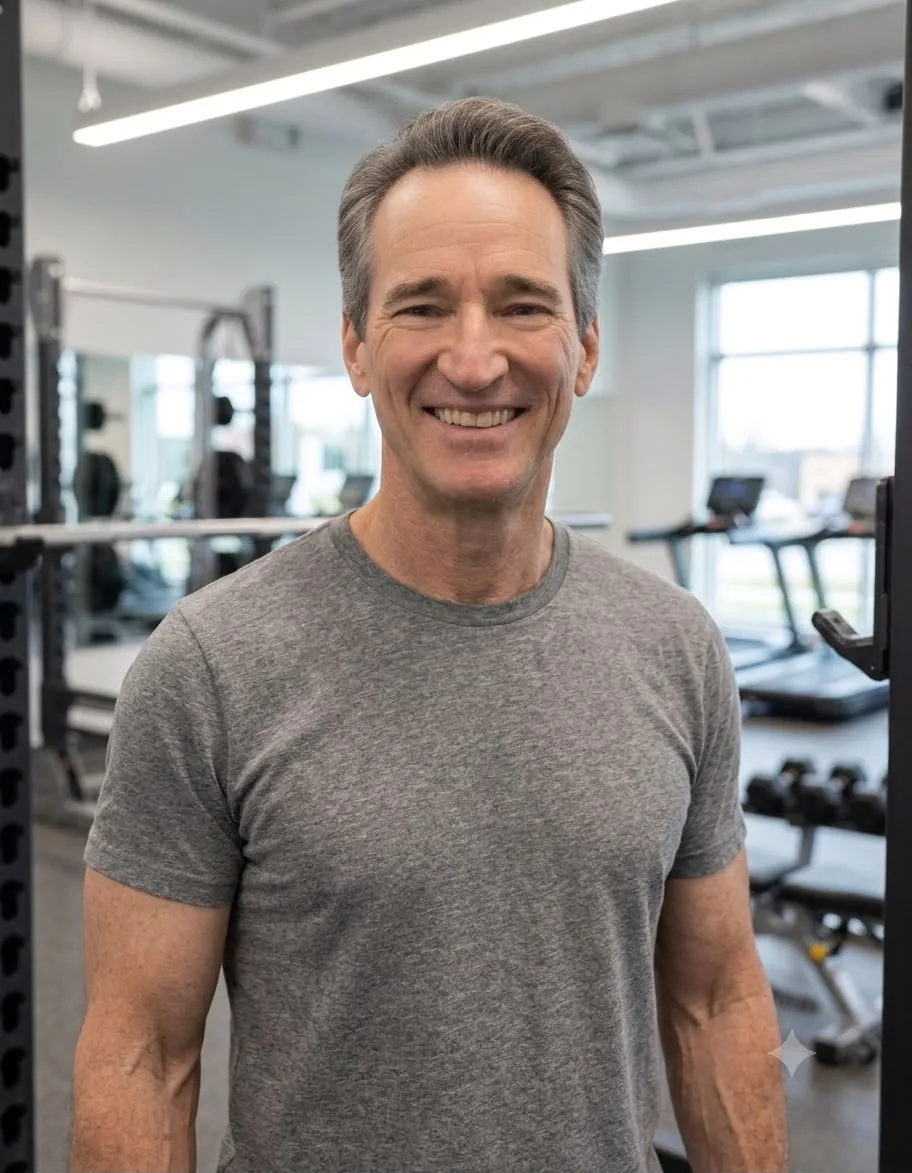
Coach Clay
Clay is the head coach at White Gorilla Fitness and has spent years coaching everyday adults, including a large over-50 community, through strength, mobility and getting back to moving well. He writes the programming behind Silverback Strong Online and filmed the movement library it runs on.