
Exercise for Bone Density After Menopause
The best exercise for bone density after menopause combines resistance training with weight-bearing, higher-impact movement, because bone responds to being loaded. When you make a muscle pull hard against a bone, or land with a bit of force, you signal the body to keep that bone strong. Estrogen changes after menopause can make bone loss faster, so the training you do now matters more, not less. This guide walks through how loading builds bone, which types of exercise tend to help most, and how to start safely. Bone health is a medical topic, so treat this as general wellness information and talk with your physician before beginning a new program.
- Bone is living tissue that gets stronger when you load it, so lifting weights and weight-bearing movement are your main tools.
- Resistance training plus some higher-impact steps, hops, or stomps tends to do more for bone than walking alone.
- Progress matters: bones adapt when the challenge slowly increases over weeks and months, not from one hard session.
- After menopause, faster bone loss makes consistent strength work more valuable, not something to skip out of caution.
- Always clear a new program with your physician first, especially if you have low bone density, a past fracture, or balance concerns.
How Loading Actually Builds Bone
Bone is not a fixed, dead scaffold. It is living tissue that constantly rebuilds itself, breaking down old bone and laying down new. The cells that build bone respond to mechanical stress. When a bone is loaded, whether by a muscle pulling on it or by the impact of your foot hitting the ground, the body reads that as a signal to reinforce the area.
This is why the type of stress matters. Gentle, steady activity that never challenges the bone gives a weak signal. Load that is meaningful and a little novel gives a stronger one. The goal is to give bones a reason to stay dense by regularly asking them to handle force.
After menopause, the drop in estrogen tips the balance so that bone breakdown can outpace rebuilding for a while. You cannot control that hormone shift, but you can control the loading signal you send. Strength and impact training are the most direct ways to send it.
Resistance Training Is the Foundation
Lifting is the core of any bone-focused program because a working muscle tugs hard on the bone it attaches to, and that pull is a powerful build signal. Compound movements that load the hips and spine tend to matter most, since those are common sites of concern after menopause.
Think squats or sit-to-stands, deadlift-style hip hinges, rows, presses, and loaded carries where you walk while holding weight. You do not need to train like an athlete. Two to three focused sessions a week, with good form and a weight that feels genuinely challenging by the last few reps, does real work.
The key is progression. Bones adapt to the demand you place on them, so the load has to slowly climb over time. This is exactly where coaching helps. At White Gorilla Fitness, our Silverback Strong program for adults 45+ is built around progressive strength, mobility, and balance so the load goes up safely instead of guesswork at home.
Weight-Bearing and Impact Movement
Weight-bearing exercise means your feet and legs support your body against gravity. Walking counts and is good for general health, but on its own it is a fairly mild signal for bone because your body is already used to it. To nudge bone, you usually want a bit more impact.
For many people that means brisk walking with short bursts of faster steps, light jogging if joints allow, stair climbing, or simple heel drops where you rise onto your toes and let your heels strike the floor. Small hops or firm stomps, done in controlled sets, can also help. The idea is brief, purposeful impact, not pounding for a hour.
How much impact is appropriate depends heavily on your current bone health. Someone with strong bones can tolerate more than someone who has been told their bone density is low or who has had a fracture. This is a genuine talk-to-your-physician point, because the right level of impact for you is a medical judgment, not an one-size answer.
Balance, Falls, and Why They Belong in a Bone Plan
Bone strength protects you in one main way: it lowers the chance that a fall or bump results in a broken bone. But there is a second half to that equation. If you can avoid falling in the first place, you avoid the impact entirely. That is why balance work belongs in any honest bone plan.
Simple practice pays off. Standing on one foot while you brush your teeth, walking heel to toe in a straight line, and controlled step-ups all train the ankles, hips, and reflexes that keep you upright. Stronger legs from resistance training feed directly into steadier balance too.
Muscle also fades with age if it is not challenged. Research generally shows that inactive adults lose roughly 3 to 8% of muscle per decade after 30, and that loss speeds up later in life. Keeping muscle through training supports both the bone signal and the stability that keeps you on your feet.
Building a Weekly Routine You Can Sustain
A workable week might look like two to three strength sessions, a couple of short bouts of impact or brisk weight-bearing movement, and a few minutes of balance practice most days. That is enough structure to send a real signal without living in the gym.
Consistency beats intensity here. Bone remodels slowly, over months, so the program that quietly happens every week will always beat the heroic effort you do twice and abandon. Start lighter than you think you should, then add small amounts over time.
If planning all of that feels like a lot, that is normal, and it is exactly what coaching solves. Our program runs small groups kept deliberately small with weekly one-on-one check-ins, so an adult 45+ can walk in without a plan and leave with progression handled. Whatever route you choose, get your physician's clearance first, then let the weeks stack up.
Frequently asked questions
What is the best exercise for bone density after menopause?
There is no single best move. The strongest approach pairs resistance training, such as squats, hip hinges, rows, and presses, with some weight-bearing and higher-impact movement like brisk walking bursts, stair climbing, or controlled heel drops. Add balance work to reduce fall risk. Because your ideal level of impact depends on your current bone health, confirm the plan with your physician before starting.
Is walking enough to protect my bones?
Walking is genuinely good for your heart, mood, and general health, and it is far better than being sedentary. On its own, though, it is a mild signal for bone because your body is already adapted to it. To better support bone, most people need to add resistance training and some brief, purposeful impact rather than relying on walking alone.
How often should I train for bone health?
A common, sustainable pattern is two to three strength sessions a week, a few short bouts of impact or brisk weight-bearing activity, and a few minutes of balance practice on most days. Bone adapts slowly over months, so steady weekly consistency matters more than occasional hard efforts. Progression, meaning slowly increasing the challenge, is what keeps the signal working.
I already have low bone density. Is lifting weights safe?
For many people, appropriate strength training is one of the most helpful things they can do, but low bone density or a past fracture changes what is safe, especially around heavy spinal loading and high impact. This is a medical decision. Talk with your physician first, and consider working with a coach who can adjust movements and loading to your situation. Our Silverback Strong program is designed with this kind of gradual, supervised progression in mind.
How long until exercise affects my bone density?
Bone remodels slowly, so meaningful changes are measured in months, not days or weeks. That is a reason to start now and stay consistent rather than expecting fast results. In the shorter term you will likely notice better strength, steadier balance, and more confidence with daily movement, all of which help protect you while the slower bone changes take place.
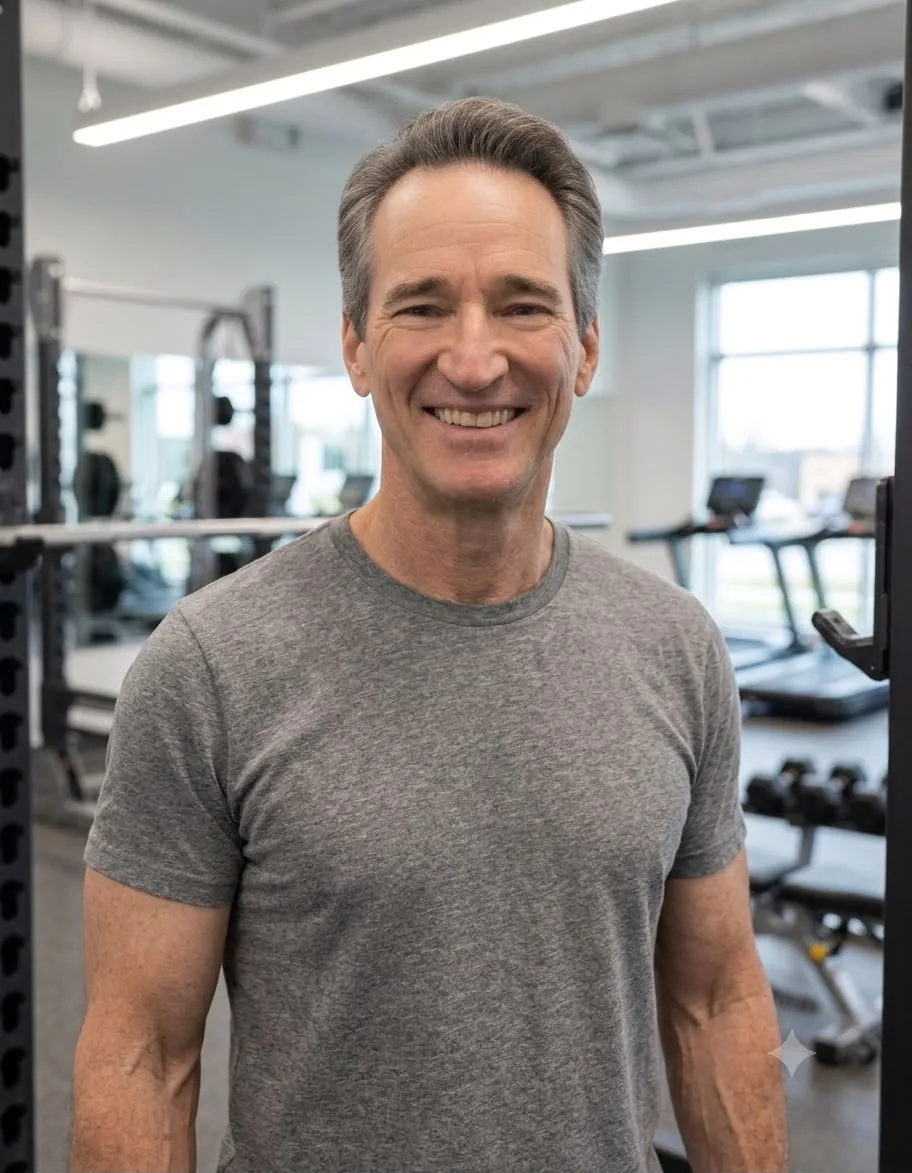
Coach Clay
Clay is the head coach at White Gorilla Fitness and has spent years coaching everyday adults, including a large over-50 community, through strength, mobility and getting back to moving well. He writes the programming behind Silverback Strong Online and filmed the movement library it runs on.