
Functional Fitness: Training to Get Off the Floor
Functional fitness for older adults means training the real movements daily life demands, and the single most telling measure of it is getting up off the floor without pushing off with your hands. If you can lower to the floor and stand back up using mostly your own strength, balance, and mobility, you have the ingredients that keep you independent for decades. If it feels scary or impossible today, that is not a life sentence. It is a skill you can rebuild, and this guide shows you how, step by step.
- Getting off the floor blends strength, balance, mobility, and coordination into one honest measure of everyday independence.
- The sitting-rising assessment scores how much support you need to get up and down. Fewer hands and knees on the way down means a better score.
- You do not train the floor by forcing it. You build the pieces first: leg strength, hip mobility, and controlled kneeling transitions.
- Inactive adults lose roughly 3 to 8% of muscle per decade after 30, so the floor gets harder mostly from disuse, not age alone.
- Practice getting up and down a few times a week, near a sturdy chair, and progress as your confidence grows.
Why getting off the floor is the benchmark that matters
Most fitness benchmarks measure one thing at a time. A grip check gauges hand strength. A treadmill checks your heart and lungs. Getting off the floor is different because it stacks everything at once: you need leg and hip strength to push up, mobility to fold and unfold your joints, balance to stay steady through the transition, and the coordination to sequence it all smoothly.
That is exactly why it predicts so much about daily life. The floor is where the real stakes live. It is picking up a grandchild, retrieving a dropped set of keys, gardening in spring, or getting back up after a stumble. An adult who can get off the floor with ease has a body that cooperates with everyday demands.
There is also a safety angle. A fall is far less dangerous when you can calmly get yourself back up. Being stranded on the floor, unable to rise, is what turns a minor slip into an emergency. Training the get-up is training your own recovery plan.
The floor check and what your score means
A simple version many people use is the sitting-rising assessment. From standing, you lower yourself to a cross-legged seat on the floor, then rise back to standing, using as little support as possible. You start with a full score and subtract a point each time you use a hand, a forearm, a knee, or the side of your leg for support, and subtract for any wobble that needs a steadying touch.
The point is not the exact number. The point is the pattern it reveals. If you need both hands and a knee just to get down, your legs, hips, and balance are asking for attention. If you can float down and up with a light touch or none at all, you have real functional capacity to protect.
Try it once, safely, near a couch or sturdy chair so you have something to grab if needed. Note honestly how much help you used. That becomes your baseline, and the whole goal of training is simply to need less support over time.
How to actually get up off the floor
Getting up is a skill with a repeatable sequence, not a random scramble. One reliable pattern is the half-kneel rise. From sitting, roll to your side and press up onto your hands and knees. Bring one foot flat on the floor in front of you so you are in a half-kneeling position, like proposing.
From there, drive through that front heel, use your hands on your thigh for a boost if you need it, and stand tall. To get down, reverse the steps: step one foot back into a kneel, lower the back knee, then ease down to a seat. Controlling the way down is just as important as the way up.
Practice the sequence slowly and deliberately. Smoothness comes from repetition, and once the pattern feels automatic, you stop thinking about it and simply do it. That automatic confidence is a big part of what keeps older adults moving freely.
How to train the pieces that make it possible
You rarely fix the floor by only practicing the floor. You build the underlying strength and mobility, and the get-up gets easier as a result. Start with sit-to-stands from a chair: stand up and sit down without using your hands, for a set of eight to twelve, a few days a week. This is the single most transferable strength drill for the floor.
Add hip and ankle mobility so your joints can reach the positions the floor requires. Gentle deep squats to a chair, calf and ankle stretches, and supported half-kneeling holds all help your body fold and unfold with less strain. Balance work matters too: practice standing on one foot near a counter, building from a few seconds to thirty.
Progress gradually. Lower to a higher surface first, like a low ottoman, then work toward the floor as your strength and confidence grow. Muscle responds to consistent, progressive effort at any age, which is why a structured plan beats occasional hard tries. This kind of measured, joint-friendly progression is the core of the Silverback Strong program at White Gorilla Fitness, where the coaching is built for adults 45 and up and nobody gets rushed or judged.
Practicing safely at home
You can start today with almost no equipment. Keep a sturdy chair or a kitchen counter within arm's reach every time you practice, so you always have a stable point to grab. Clear the area of rugs, cords, and clutter, and use a firm surface rather than a slippery one. A thin exercise mat or a folded towel makes kneeling more comfortable.
Go at the pace your body allows. Practice a few times a week, keep the reps low at first, and stop if anything sharpens into pain. Soreness that eases is normal. Sharp joint pain is a signal to back off and adjust. Progress is measured in months, not days, and small consistent sessions win.
One honest note: this is general wellness guidance, not medical advice. If you have had a recent fall, a joint replacement, heart or blood pressure concerns, dizziness, or any condition that affects balance, talk to your physician before starting floor work, and ask whether a supervised setting is a smart first step. If you would rather not practice alone, a coached small group is a safe way to begin. You can reach a coach at White Gorilla Fitness at +1 (562) 253-2685.
Frequently asked questions
What is functional fitness for older adults?
Functional fitness for older adults is training that improves the real movements daily life requires, such as standing up, climbing stairs, carrying groceries, and getting off the floor. Instead of isolating one muscle, it builds strength, balance, mobility, and coordination together so everyday tasks stay easy and independence is protected. The get-up from the floor is one of the clearest measures of this kind of fitness.
Why is getting up off the floor so important as we age?
Getting off the floor combines leg strength, hip and ankle mobility, and balance into one movement, so it reflects overall physical capacity. It also matters for safety: if you fall, being able to calmly get back up prevents a minor slip from becoming an emergency. Struggling with the floor is often an early sign that strength and mobility need attention, and the good news is both respond well to training.
Is it too late to improve if I already struggle to get off the floor?
No. Difficulty getting off the floor usually comes from disuse rather than age itself. Research generally shows that muscle and strength respond to consistent, progressive training well into later decades, and inactive adults lose roughly 3 to 8% of muscle per decade after 30, which is a trend you can slow and partly reverse. Most people who practice the right progressions see steady improvement within weeks to months.
How often should I practice getting up and down from the floor?
A few times a week is a good starting point for most people. Pair the practice with supporting drills like chair sit-to-stands, gentle mobility work, and balance holds. Keep the reps low at first, prioritize control over speed, and always have a sturdy chair or counter nearby. Progress gradually as the movement feels smoother and steadier.
Should I check with my doctor before starting floor exercises?
Yes, especially if you have had a recent fall, a joint replacement, heart or blood pressure concerns, dizziness, or any condition affecting balance. This guidance is for general wellness and is not medical advice. Talk to your physician about what is appropriate for you, and consider starting in a supervised setting, such as a coached small group, if practicing alone feels unsafe.
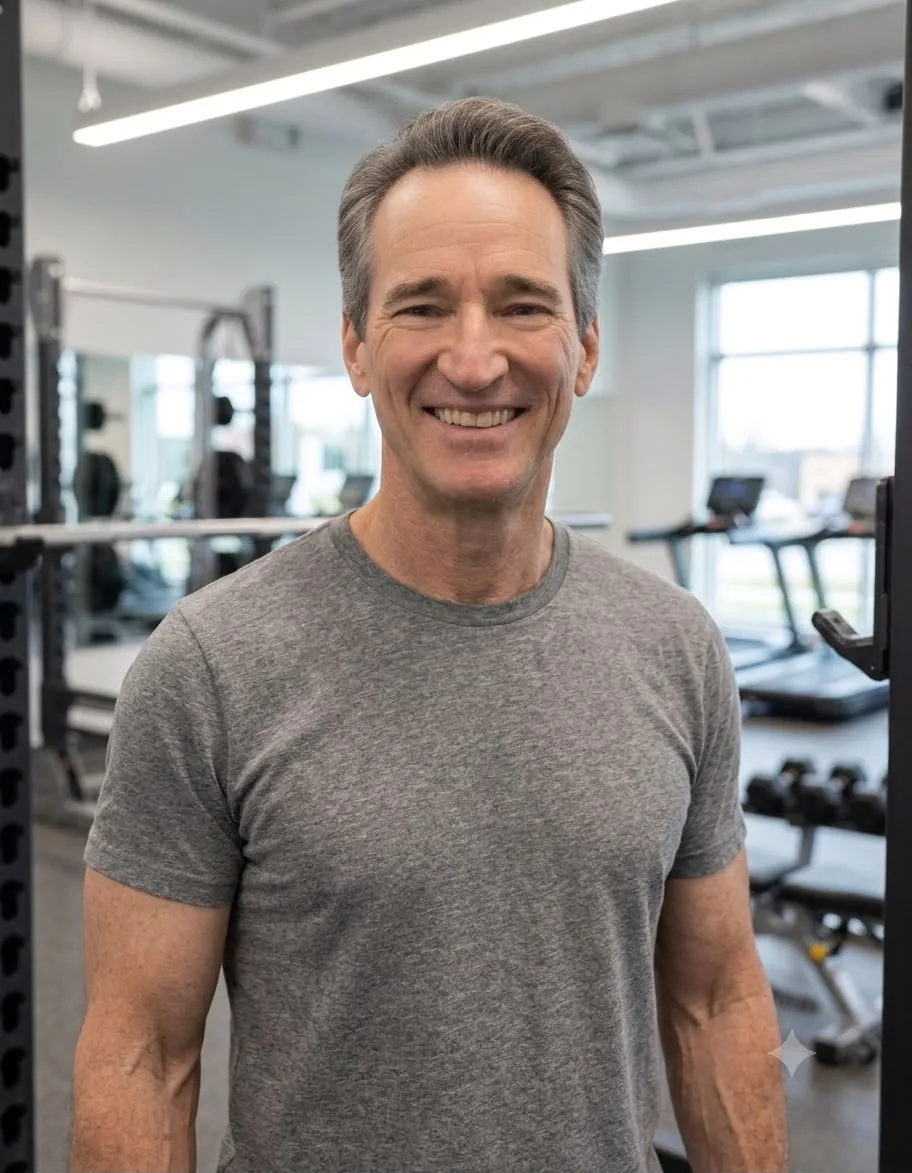
Coach Clay
Clay is the head coach at White Gorilla Fitness and has spent years coaching everyday adults, including a large over-50 community, through strength, mobility and getting back to moving well. He writes the programming behind Silverback Strong Online and filmed the movement library it runs on.