
How Much Protein Adults Over 50 Really Need
Most healthy adults over 50 do best on roughly 0.6 to 0.8 grams of protein per pound of body weight per day, which is more than the old baseline guideline. For a 170-pound adult that lands around 100 to 135 grams a day. Just as important, protein for adults over 50 works best when you spread it across meals and hit about 30 to 40 grams at each one, because aging muscle needs a bigger single dose to respond. The most common gap is breakfast, and fixing that one meal is often the fastest win.
- Aim for roughly 0.6 to 0.8 grams of protein per pound of body weight daily after 50, higher than the old adult minimum.
- Spread it out: target about 30 to 40 grams per meal rather than loading it all at dinner.
- Anabolic resistance means older muscle needs a larger single protein dose to trigger repair, so per-meal amounts matter more than they used to.
- Breakfast is the usual weak spot. Most people get 5 to 15 grams there when they could get 30.
- Protein alone won't rebuild strength. Pair it with resistance training to actually keep and grow muscle.
Why the protein rules change after 50
The often-quoted baseline of about 0.36 grams of protein per pound was set to prevent deficiency in the average adult, not to help a 55-year-old hold onto muscle. Once you pass 50, that number is a floor, not a target. A more practical range for active older adults is roughly 0.6 to 0.8 grams per pound of body weight per day.
The reason is a well-documented shift called anabolic resistance. In plain terms, aging muscle listens to protein less well. The same steak that would spark plenty of muscle repair at 30 produces a smaller response at 60, so you need a bit more input to get the same output.
This matters because muscle is not just about looking strong. It drives balance, bone support, metabolism, and how easily you get up off the floor or carry groceries in from the car. Research generally shows inactive adults lose roughly 3 to 8% of muscle per decade after 30, and the losses can speed up later in life. More protein, paired with training, is one of the clearest levers you can pull. Anyone with kidney concerns or on a special diet should talk to a physician before raising protein significantly.
The per-meal dose that actually matters
Here is the part most people miss. Your body does not simply bank a giant dinner and use it all day. To trigger muscle repair, each meal needs to clear a threshold, and for older adults that threshold is higher. Most guidance points to about 30 to 40 grams of quality protein per meal to reliably switch on muscle building.
Compare two days that both total 100 grams. Day one is 10 grams at breakfast, 20 at lunch, and 70 at dinner. Day two is 35, 30, and 35. The second pattern gives your muscles three real signals to rebuild instead of one, and it tends to keep you fuller and steadier through the day.
You do not need to weigh every ounce. A useful mental picture is a palm-sized portion of meat, fish, or poultry, plus a supporting player like Greek yogurt, eggs, cottage cheese, beans, or tofu. Hit that at three meals and a protein-aware snack, and the daily total mostly takes care of itself.
The protein-first breakfast fix
Breakfast is where the plan usually falls apart. Toast, cereal, a banana, or a muffin can be tasty, but they often deliver only 5 to 15 grams of protein. That leaves your muscles coasting all morning and sets up the classic back-loaded day where dinner has to carry everything.
Flip the order and build the plate around protein first. Three eggs plus a cup of Greek yogurt gets you close to 35 grams. A two-egg scramble with cottage cheese stirred in, or oatmeal made with milk and a scoop of protein powder, works too. Prefer to keep it simple? A bowl of plain Greek yogurt with berries and a spoon of nut butter is fast and travels well.
Buy those on your weekly run and the protein-first breakfast becomes automatic instead of a daily decision. Talk to your physician before adding protein powders or supplements, especially if you take medication or have a health condition.
Where to get it: simple, local, and affordable
You do not need exotic products to hit these numbers. Everyday foods do the heavy lifting: eggs at about 6 grams each, Greek yogurt at 15 to 20 grams per cup, cottage cheese around 25 grams per cup, chicken breast near 25 grams per palm-sized piece, canned tuna, ground turkey, and cheaper cuts like pork loin.
Plant eaters have solid options too. Lentils, black beans, tofu, tempeh, edamame, and a scoop of pea or soy protein can stack up quickly. Because plant sources are a bit less efficient for building muscle, aim toward the higher end of your per-meal target and mix sources across the day.
A quick planning trick is to pick your protein first for each meal, then build the rest of the plate around it. Vegetables, fruit, and whole grains still matter for fiber and overall health, but protein is the anchor that keeps older muscle responding.
Protein is half the equation. Training is the other half
Eating more protein without challenging your muscles is like buying lumber and never building anything. Protein supplies the raw material, but resistance training is the signal that tells your body to use it for strength rather than storage. The two work together, and neither does the full job alone.
For adults 45 and up, that does not mean punishing workouts. Two to three short strength sessions a week that cover the major movements, done with good form and a little more effort over time, are enough to hold and often reverse muscle loss. Balance and mobility work belongs in the mix too, since staying steady on your feet is what keeps you independent.
This is exactly what our Silverback Strong program at White Gorilla Fitness is built around. It is a coached six-week strength, mobility, and balance program for adults 45 and older, capped at a small group, with daily meal-photo coaching so Coach Clay can help you actually hit these protein targets instead of guessing. If you want a structured start, that is a straightforward place to begin.
Frequently asked questions
How much protein does a person over 50 need per day?
A practical target for most active adults over 50 is roughly 0.6 to 0.8 grams of protein per pound of body weight each day. For a 170-pound person that is about 100 to 135 grams daily. That is higher than the old adult minimum because aging muscle responds less efficiently to protein, so you need a bit more to maintain and build it. Anyone with kidney issues or a restricted diet should confirm the right amount with their physician first.
Why does protein per meal matter more as I age?
Older muscle experiences anabolic resistance, meaning it needs a larger single dose of protein to trigger repair than younger muscle does. Research generally shows adults over 50 respond best to about 30 to 40 grams of quality protein per meal. Spreading protein across three meals gives your muscles several strong signals to rebuild, which works better than saving most of it for one large dinner.
What is a fast high-protein breakfast?
Aim for around 30 grams before you leave the house. Simple options include three eggs plus a cup of Greek yogurt, a two-egg scramble with cottage cheese mixed in, oatmeal cooked with milk and a scoop of protein powder, or plain Greek yogurt with berries and a spoon of nut butter.
Can I get enough protein without meat?
Yes. Lentils, black beans, tofu, tempeh, edamame, soy milk, and pea or soy protein powder can add up quickly. Because plant proteins are slightly less efficient at building muscle, aim toward the higher end of your per-meal target, around 35 to 40 grams, and mix several sources through the day. Combining beans with grains and including soy foods helps cover the full range of amino acids your muscles use.
Will eating more protein alone rebuild my strength?
No. Protein provides the building material, but resistance training is the signal that tells your body to turn it into strength. Without regular strength work, extra protein does not do much for muscle. Two to three short strength sessions a week, plus balance and mobility work, combined with hitting your daily protein target, is the combination that helps adults over 50 keep and regain muscle. Our Silverback Strong program coaches both sides together.
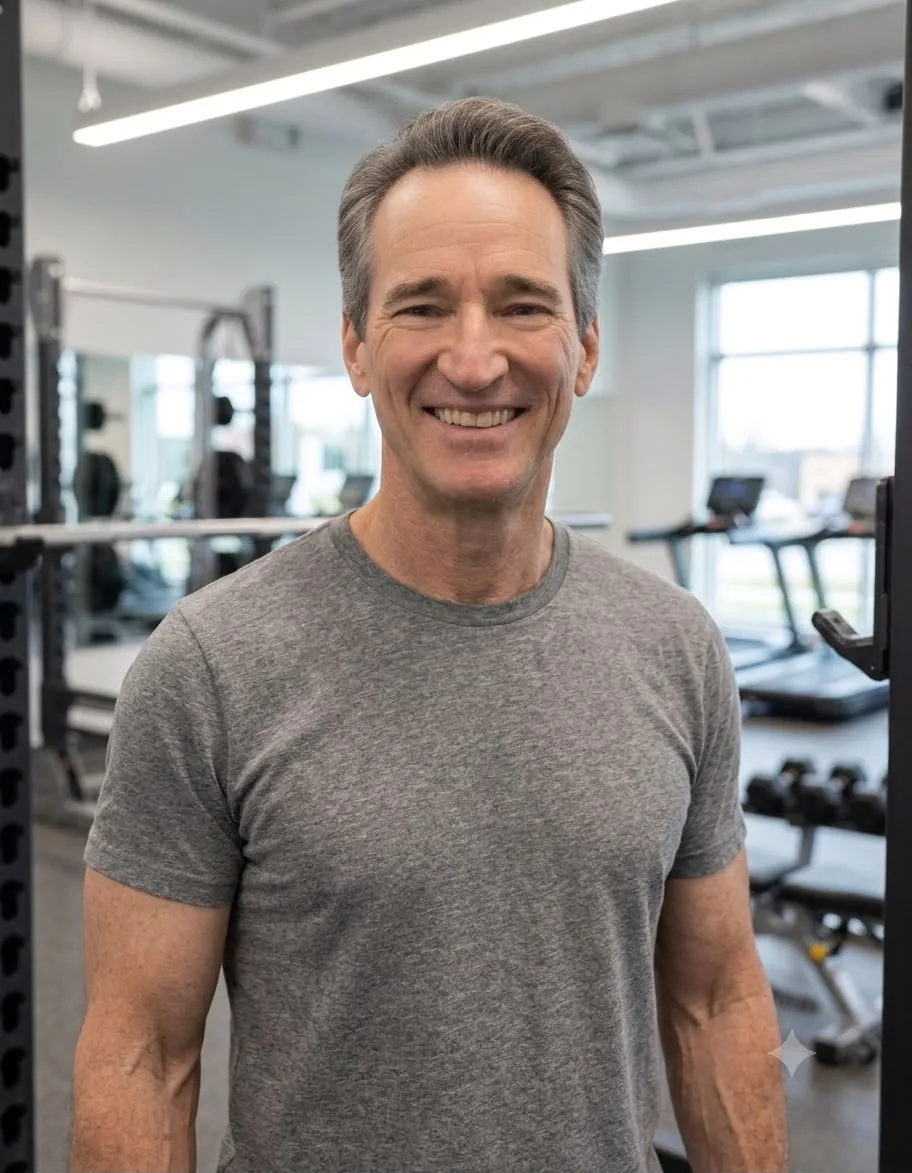
Coach Clay
Clay is the head coach at White Gorilla Fitness and has spent years coaching everyday adults, including a large over-50 community, through strength, mobility and getting back to moving well. He writes the programming behind Silverback Strong Online and filmed the movement library it runs on.