
Muscle Loss With Age: What Sarcopenia Really Costs You
Muscle loss with age, known as sarcopenia, is the slow decline in muscle mass and strength that starts earlier than most people expect. Research generally shows that inactive adults lose roughly 3 to 8% of their muscle per decade after age 30, and the pace tends to pick up after 60. The encouraging part is that this loss is not an one-way street. With the right kind of training, most people can rebuild strength, balance, and everyday function, and it often takes just two focused sessions a week.
- Muscle loss with age (sarcopenia) is real: inactive adults lose roughly 3 to 8% of their muscle per decade after 30, and it speeds up later in life.
- The biggest cost is function and balance, not looks. Less muscle means harder stairs, weaker carries, and a higher fall risk.
- Muscle responds to training at almost any age, so the decline is largely reversible with progressive resistance.
- Two well-designed strength sessions a week is enough for most adults to hold onto and rebuild muscle.
- The right two sessions matter. Proper loads and good form are where coaching pays off.
The Real Math Behind Muscle Loss With Age
Sarcopenia sounds clinical, but the math is simple. Starting in your thirties, muscle you do not use quietly slips away. Inactive adults lose roughly 3 to 8% of their muscle per decade, which can feel invisible for years because the change is so gradual.
Then the compounding catches up. By your sixties and seventies, that steady drip has added up to a meaningful loss of strength and power. Power, meaning how quickly you can produce force, tends to fade even faster than raw size, which is why standing up from a low chair or catching yourself after a stumble starts to feel harder.
The key word in all of this is inactive. The decline is not purely about birthdays. It is largely about what your muscles are asked to do, and that is something you can change.
What Sarcopenia Really Costs You
The true cost of muscle loss with age is not how your arms look in a photo. It is function. Muscle is the engine behind nearly everything you value: climbing stairs without a rail, carrying groceries from the car in one trip, getting down to play with a grandchild and back up again without a plan.
Muscle also protects you. Strong legs and hips support balance, and better balance means fewer falls. For older adults, avoiding a bad fall can be the difference between staying independent and losing months to recovery.
There is a metabolic side too. Muscle is active tissue that helps your body manage energy and blood sugar through the day. When muscle fades, daily life simply gets heavier. This is a wellness point rather than a medical treatment, so if you have specific health concerns, talk with your physician about what is right for you.
Why Muscle Loss With Age Is Reversible
Here is the good news that gets buried under the doom stories: muscle responds to training at almost any age. Studies on adults in their seventies, eighties, and beyond consistently show that people can gain strength and add muscle when they train properly. Your body does not lose the ability to build. It just needs a reason to.
That reason is progressive resistance, which is a formal way of saying you gradually ask your muscles to do a little more over time. Bands, dumbbells, machines, or your own body weight all work. What matters is effort that increases as you get stronger.
Reversible does not mean instant. But many people notice they feel steadier and more capable within the first few weeks, and measurable strength gains build from there.
What Two Sessions a Week Actually Does
You do not need to live in a gym. For most adults, two well-designed strength sessions a week is enough to turn the trend around. Research on older adults generally shows that two sessions can hold onto muscle and build it, especially when the exercises cover the movements that matter: squatting, hinging, pushing, pulling, and carrying.
Two sessions also fits a real life. It leaves plenty of recovery time, it is easy to keep on the calendar, and it removes the all-or-nothing pressure that makes people quit. Consistency over months beats heroic effort for a week.
The catch is that those two sessions need to be the right two. Loads that are too light do little, and poor form wastes the work or invites strain. This is where coaching earns its keep, matching the exercises and the effort to where you actually are today.
Getting Started
If you are 45 or older and want a smart place to begin, the Silverback Strong program at White Gorilla Fitness was built for exactly this. It is a coached six-week program focused on strength, mobility, and balance, run in small groups so Coach Clay can watch your form and adjust your loads.
You get progress assessments on day 0, 21, and 42 so you can see the change in real numbers, weekly one-on-one check-ins, and session times spread across the day at 6 and 7am, 11am and noon, and 6 and 7pm. It is one payment, no membership, and no auto-renewal, with a money-back scoreboard guarantee: do the work for six weeks or every dollar comes back.
Whether you train with us or on your own, the message is the same. Muscle loss with age is common, but it is not a life sentence. Two honest sessions a week, started this month, can change how the next decade feels.
Frequently asked questions
At what age does muscle loss with age start?
For most people it begins in their thirties. Research generally shows inactive adults lose roughly 3 to 8% of their muscle per decade after age 30, and the rate tends to accelerate after about 60. The earlier you add strength training the more muscle you keep, but it is genuinely never too late to start.
Can you really rebuild muscle after 60 or 70?
Yes. Studies on adults in their seventies and eighties consistently show they can gain strength and add muscle with proper resistance training. Progress may come a little slower than it would at 25, but the ability to build does not disappear with age.
Is two strength sessions a week really enough?
For most adults, yes. Two well-designed sessions a week can maintain and build muscle when they cover the main movement patterns and the effort increases over time. Two sessions also leaves room to recover and is far easier to stick with month after month, which is what actually drives results.
What is the difference between muscle loss and just getting weaker?
They are closely linked. Sarcopenia describes the loss of muscle mass, and that loss is a major reason strength and power decline with age. Power, or how fast you can produce force, often fades even faster than size, which is why quick actions like catching your balance get harder. Training addresses both.
Do I need supplements or protein powders to fix this?
Training is the main driver, and adequate protein from everyday foods supports it. Some people do use supplements, but they are not required, and needs vary from person to person. Talk with your physician before starting any supplement, especially if you take medications or have existing health conditions.
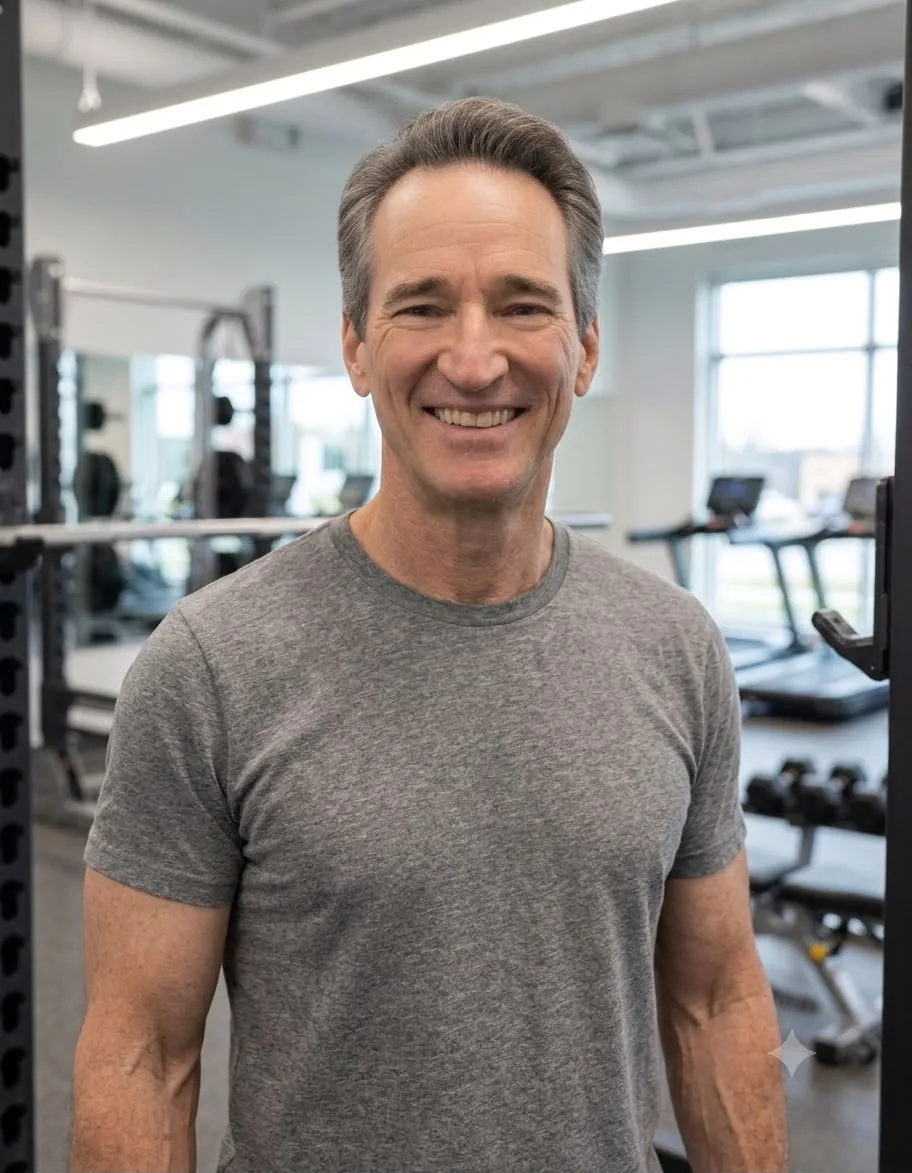
Coach Clay
Clay is the head coach at White Gorilla Fitness and has spent years coaching everyday adults, including a large over-50 community, through strength, mobility and getting back to moving well. He writes the programming behind Silverback Strong Online and filmed the movement library it runs on.