
How to Start Exercising at 50 (After Years Off)
To start working out at 50 after years off, begin with short, low-impact sessions of 10 to 15 minutes, about three days a week, and build slowly from there. The goal for your first two weeks is not to get fit fast. It is to show up, move gently, and prove to yourself the habit is repeatable. Consistency at an easy level beats one hard week that leaves you sore and sidelined. Below is exactly how to ease in, including a day-by-day plan you can follow at home before you ever set foot in a program.
- Start with 10 to 15 minute sessions, three days a week, and treat simply showing up as the win.
- Get a quick physician clearance first if you have any heart, joint, blood pressure, or medication concerns.
- Build your training around five patterns: stand up, push, pull, hinge, and balance.
- Use the talk check to keep effort easy at first. If you cannot speak in short sentences, slow down.
- A coached small group like Silverback Strong keeps the plan simple and keeps you accountable.
Start Where You Actually Are, Not Where You Used to Be
If you have been off for years, your body has quietly changed, and that is completely normal. Research generally shows that inactive adults lose roughly 3 to 8% of muscle per decade after 30. That is not a reason to panic. It is a reason to start on purpose and give your joints, heart, and tendons time to adapt.
Before your first session, get a quick clearance if you have any concerns. Talk to your physician, especially if you have been sedentary for a long time, take medications, manage blood pressure, or have had a recent injury. A five minute conversation can save you weeks of setbacks.
Then set a floor, not a ceiling. Your only rule for the first month is to move on your scheduled days, even when the session is short. Motivation tends to follow action, not the other way around, so the first job is simply to begin.
Your Exact First Two Weeks (Follow Along at Home)
This is a screen-first on-ramp. You can do every bit of it in your living room with a phone propped up and a sturdy chair. No gym, no equipment, no experience needed. Pick three non-consecutive days, for example Monday, Wednesday, and Friday.
Week one, three days, about 10 to 15 minutes each. Start with a 5 minute easy walk in place or around the house to warm up. Then do sit-to-stands from a chair, 2 rounds of 8. Follow with wall push-ups, 2 rounds of 8. Add a slow standing march for 1 minute. Finish with 3 minutes of gentle stretching. On your off days, take a short, relaxed walk.
Week two, add a fourth day and a few minutes, aiming for 15 to 20 minutes. Keep the same movements but add a third round, and hold a countertop for a 20 second single-leg balance on each side. If anything feels sharp or dizzy, stop and rest. Mild muscle awareness the next day is fine. Pain is a signal to back off.
The Movement Patterns That Matter Most After 50
You do not need dozens of exercises. You need to train a handful of patterns that carry over to real life, like carrying groceries in from the car or getting off the floor. Focus on five: standing up (a squat pattern), pushing, pulling, hinging at the hips, and balance.
Sit-to-stands train standing up. Wall or counter push-ups train pushing. Pulling can be as simple as rows using a towel or a light resistance band. Hinging means bending at the hips with a flat back, which protects your lower back for everyday lifting. Balance work, like standing on one foot near a counter, is one of the most valuable and most skipped skills after 50.
Rotate through these patterns each week and add small amounts over time: one more round, a few more seconds, a slightly deeper range. Slow, steady progress is what keeps you moving for decades, not just for a month.
How Hard Should It Feel? Use the Talk Check
When you are deconditioned, the most common mistake is going too hard on day one and quitting by day four. The fix is to gauge effort honestly. Use the talk check: at an easy pace you can hold a full conversation, and at a moderate pace you can speak in short sentences but not sing.
For your first two weeks, stay in that easy to moderate zone. You should finish each session feeling like you could have done a little more. That leftover energy is what makes you want to come back, and coming back is the entire game right now.
As weeks pass, you can let a few efforts climb closer to moderately hard while still being able to speak. Recovery matters just as much as effort, so prioritize sleep and give sore muscles a day before working them hard again.
Make It Stick
Habits hold when your environment supports them. Stock simple protein and produce so eating well is easy. Aim to include a protein source at each meal to support the muscle you are rebuilding. If you are considering supplements, talk to your physician first.
Accountability is the other half. Following a screen at home is a great start, but many people over 50 progress faster with eyes on their form and a coach who adjusts the plan. That is exactly what Silverback Strong at White Gorilla Fitness is built for. It is a coached 6-week strength, mobility, and balance program for adults 45 and up, in a small coaching roster, with weekly one-on-one check-ins.
If you want structure and a schedule that fits real life, sessions run at 6 and 7am, 11am and noon, and 6 and 7pm. Whether you go it alone or join a group, the principle is the same: start small, stay consistent, and let the habit compound. Six weeks from now, you will be glad you began today.
Frequently asked questions
Is it safe to start working out at 50 after years off?
For most people, yes, when you start gently and progress slowly. Begin with short, low-impact sessions of 10 to 15 minutes and increase gradually over several weeks. Because you have been inactive, get clearance from your physician first if you have any heart, joint, or blood pressure concerns, take medications, or have a recent injury. Stop and rest if you feel sharp pain, chest discomfort, or dizziness.
How many days a week should a beginner over 50 train?
Start with three non-consecutive days a week, such as Monday, Wednesday, and Friday, so your body has time to recover between sessions. After a couple of weeks you can add a fourth day. On your off days, easy walking is a great way to stay active without adding strain. Quality and consistency matter far more than piling on extra days early.
What is the best exercise to start with at 50?
Sit-to-stands from a sturdy chair are one of the best starting points. They train the same pattern you use to get up from a couch or a car, they require no equipment, and they are easy to scale by using a higher or lower seat. Pair them with wall push-ups and a short balance drill, and you are already covering the movements that matter most for daily life.
How long until I see results after starting to exercise at 50?
Most people notice better energy, sleep, and mood within the first two to three weeks, even before visible changes appear. Strength and stamina improvements often become clear around the four to six week mark with consistent training. Visible body changes take longer and depend heavily on nutrition and sleep, so focus on showing up regularly rather than watching the mirror day to day.
Do I need a gym or equipment to get started?
No. You can complete the entire first two weeks at home with only a sturdy chair, and a wall or countertop for balance and push-ups. A light resistance band is a helpful, inexpensive addition for pulling exercises later on. Many people over 50 eventually choose a coached group like Silverback Strong for form feedback and accountability, but you can build a strong foundation with no equipment at all.
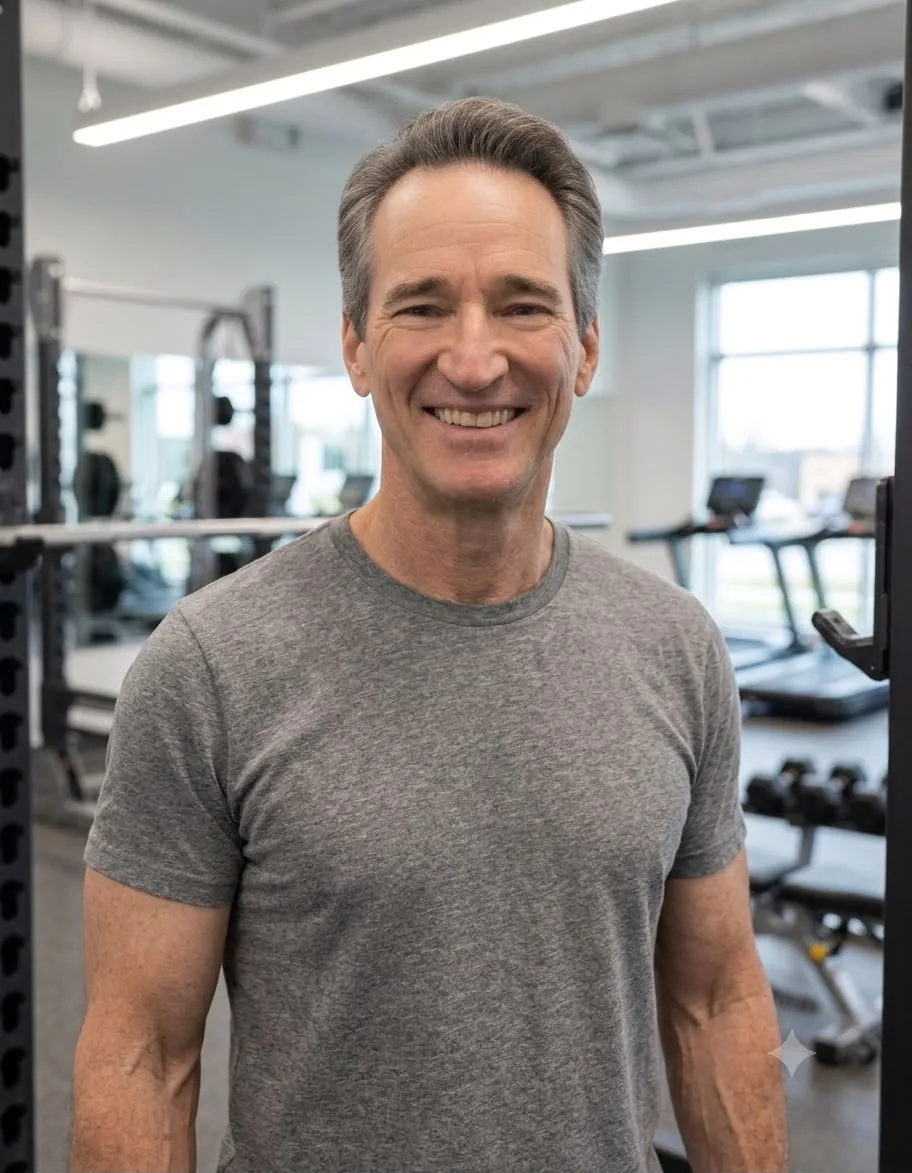
Coach Clay
Clay is the head coach at White Gorilla Fitness and has spent years coaching everyday adults, including a large over-50 community, through strength, mobility and getting back to moving well. He writes the programming behind Silverback Strong Online and filmed the movement library it runs on.