
Is It Too Late to Build Muscle at 60?
No, it is not too late to build muscle at 60, and the research is clear on this point. Adults in their 60s, 70s, 80s and even 90s can and do build measurable muscle and strength when they train consistently with enough resistance. Your body still responds to the right stimulus at any age, which means the best day to start was years ago and the second best day is today. Waiting only gives away strength you could be keeping.
- Muscle growth is possible well into your 60s, 70s and beyond when you train with real resistance a few times a week.
- Inactive adults lose roughly 3 to 8% of muscle per decade after 30, so starting now protects what you have and rebuilds what you lost.
- Progress after 60 comes from progressive resistance, enough protein, and recovery, not from punishing yourself in the gym.
- Coaching and a small group help you train safely, keep the right intensity, and stay consistent long enough to see change.
- Every year you wait makes the climb steeper, which is exactly why starting today beats waiting for a better time.
What the Research Actually Says About Building Muscle After 60
For a long time people assumed muscle building belonged to the young. Research over the past few decades has told a very different story. Studies of adults in their 60s, 70s and even their 90s have repeatedly shown that when older adults lift weights with enough challenge, they gain strength and add lean muscle. The body does not lose its ability to adapt. It simply needs a real reason to change.
Here is the honest nuance. Older adults often build strength a little more slowly than a 25 year old, and the raw size gains may be more modest. That is a difference of degree, not a closed door. Strength improvements in particular tend to come quickly in the first weeks and months, because your nervous system gets better at recruiting the muscle you already have before new tissue is even added.
The practical takeaway is simple. Age changes the pace and the ceiling a bit. It does not remove your ability to get meaningfully stronger, steadier and more capable. Most people who start in their 60s are surprised by how much progress the first few months bring.
Why Starting Now Beats Waiting for a Better Time
Muscle loss with age has a name, and it moves in one direction when you ignore it. Inactive adults lose roughly 3 to 8% of muscle per decade after 30, and that pace often quickens later in life. Every year you postpone training, you start the next attempt from a lower baseline. Waiting is not neutral. It quietly raises the cost of getting started.
There is a flip side that works in your favor. The same body that loses muscle when unused rebuilds it when challenged. A 62 year old who begins today is training with more muscle and better joints than that same person will have at 66. Starting now means you are building on a stronger foundation than you will ever have again.
This is not about chasing a bodybuilder physique. Those wins compound, and they start the day you begin.
How Muscle Building Works Differently in Your 60s and 70s
The core principle does not change with age. Muscles grow when you ask them to do progressively more over time. What shifts after 60 is the supporting cast around that principle. Recovery takes a bit longer, so training hard every single day is counterproductive. Two to three focused resistance sessions a week, with rest in between, is often the sweet spot.
Protein matters more than many older adults realize. Research generally shows that people over 60 handle and use protein less efficiently, so spreading adequate protein across your meals helps your muscles rebuild after training. Simple sources like eggs, Greek yogurt, chicken, fish and beans do the job without anything exotic. If you are considering supplements or making big diet changes, talk to your physician first, especially if you manage a health condition or take medication.
Form and joint care also move up the priority list. Good technique, a proper warm up, and starting with a manageable load protect your knees, shoulders and back so you can keep training for years. Slow and steady genuinely wins here, because consistency over months and years is what actually reshapes your strength.
A Realistic Way to Start Training After 60
You do not need to overhaul your life to begin. Start with the basic human movements that carry over to daily living: standing up from a chair, hinging at the hips to pick something up, pushing, pulling, and carrying a load across the room. These patterns build the strength that matters most for staying independent.
Begin lighter than you think you should, and add a little challenge as it gets easier. That gradual increase is the engine of progress. Aim for a weight that feels genuinely difficult for the last couple of repetitions while still letting you keep good form. Pair that with a short warm up, a little balance work, and enough sleep, and you have the outline of a program that works.
The hardest part is usually not the exercise. It is knowing whether you are doing enough to grow without doing too much too soon, and staying consistent past the first few weeks when motivation dips. That is exactly where structure and accountability change everything.
Why Coaching and a Small Group Make the Difference
Left on our own, most of us either go too easy to see real change or too hard and get hurt or discouraged. Good coaching solves both. A coach sets the right starting load, watches your form, and nudges the challenge up at a pace your body can handle. That is how you get results without gambling on your joints.
This is the thinking behind Silverback Strong at White Gorilla Fitness. It is a coached six week strength, mobility and balance program built specifically for adults 45 and up, run in a small coaching roster so head coach Clay can actually see and adjust for each person. You get weekly one on one check ins, progress assessments along the way, and daily support, all in a room full of people in the same season of life.
You do not have to figure it out alone or wonder if you are doing it right. If you have been telling yourself you are too old to start, that story is not backed by the science. Adults, from to to, are getting stronger in their 60s and 70s right now. You can be one of them, and the best time to begin is this week.
Frequently asked questions
Can you really build muscle at 60 or older?
Yes. Research consistently shows that adults in their 60s, 70s, 80s and even 90s build measurable strength and lean muscle when they train with enough resistance a few times per week. Strength gains often come quickly in the first weeks because your nervous system improves fast, with muscle size following over the months. The pace and ceiling may be a bit more modest than for a younger person, but the ability to improve does not disappear with age.
How long does it take to see results after 60?
Most people notice strength and energy improvements within the first four to eight weeks of consistent resistance training, even before visible muscle changes show up. Early gains come largely from your body learning to use the muscle you already have more effectively. Visible changes in muscle tone and everyday capability typically build over three to six months of steady training. Consistency matters far more than intensity here, which is why a structured program helps.
How often should someone over 60 lift weights?
For most older adults, two to three resistance sessions per week with rest days in between is the sweet spot. Recovery takes a little longer as we age, so training hard every day tends to backfire and increase injury risk. Each session can be relatively short if the intensity is appropriate. Pairing lifting with some balance and mobility work rounds out a program that protects independence. Check with your physician before starting if you have health concerns.
Is lifting weights safe for older adults with joint concerns?
For many older adults, properly coached resistance training is one of the better things you can do for joint and muscle health, because stronger muscles support and stabilize your joints. The keys are good technique, starting with a manageable load, and increasing challenge gradually. If you have arthritis, past injuries, a heart condition, or other medical concerns, talk to your physician before beginning and let your coach know so the program can be adjusted for you.
What is Silverback Strong at White Gorilla Fitness?
Silverback Strong is a coached six week strength, mobility and balance program built specifically for adults 45 and older at the White Gorilla Fitness program at 8 Woodland Ave. It runs in a small coaching roster people and includes weekly one on one check ins, progress assessments to track progress, and daily coaching support. It is one payment of 599 dollars with no membership or auto renewal, and it comes with a money back guarantee if you do the work for the full six weeks. You can call the program at +1 (562) 253-2685 to ask about start times.
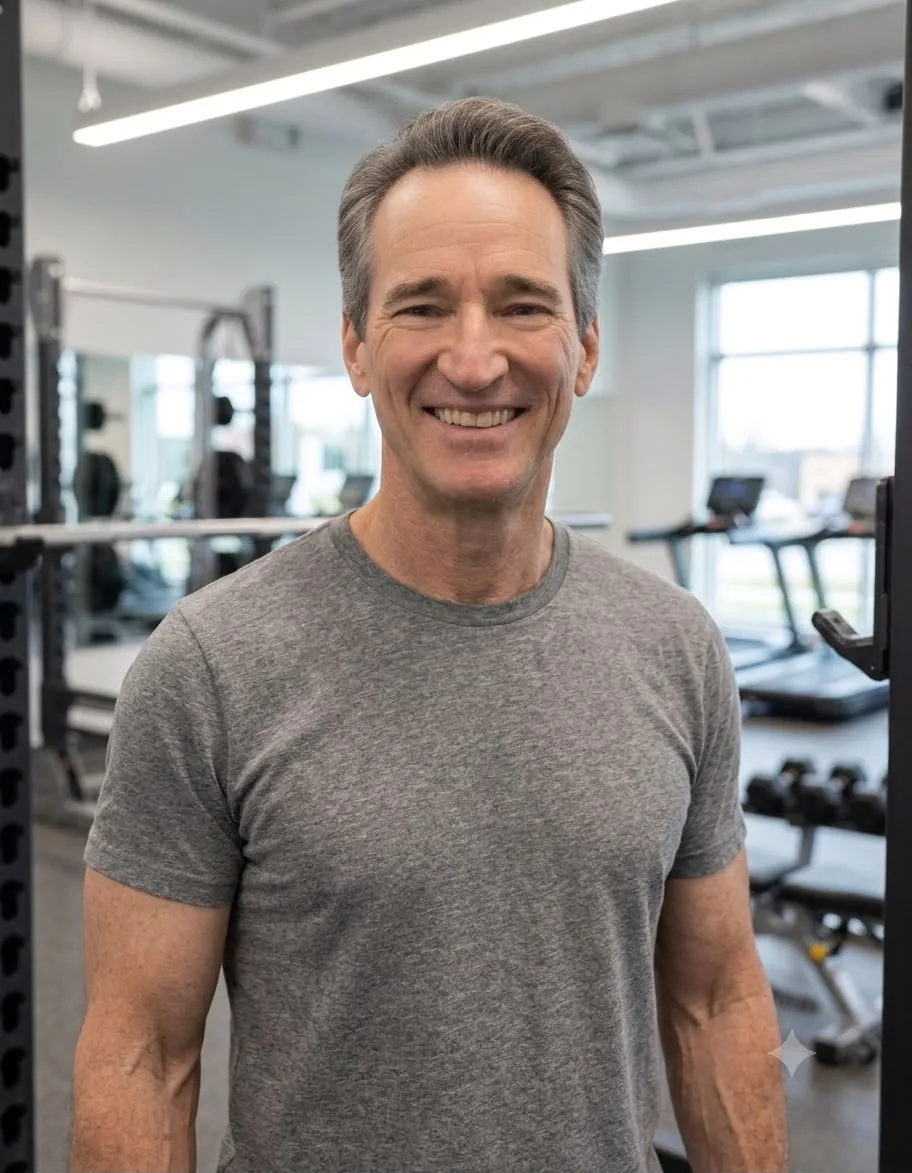
Coach Clay
Clay is the head coach at White Gorilla Fitness and has spent years coaching everyday adults, including a large over-50 community, through strength, mobility and getting back to moving well. He writes the programming behind Silverback Strong Online and filmed the movement library it runs on.