
Hip Mobility Exercises for Stiff, Achy Hips
The best hip mobility exercises for stiff, achy hips are a short daily set of moves that open the front of the hips, wake up the glutes, and gently rotate the joint through its full range. A 10-minute routine built around the couch stretch, 90/90 rotations, hip circles, and a few friends can loosen desk-tight hips and support easier walking, squatting, and stair climbing. Below is a routine you can start today at home, no equipment required. If you have hip pain that is sharp, worsening, or tied to a known condition, check with your physician before beginning.
- Ten minutes a day beats one long stretch session per week. Consistency is what actually changes how your hips feel.
- The couch stretch targets the hip flexors and quads that get short from sitting, which is often the real source of that stiff, pinched feeling up front.
- Pair opening moves with glute and rotation work so the joint gets both flexibility and control, not just a passive stretch.
- Move into a gentle stretch, not into pain. Aim for a 4 or 5 out of 10 tension you can breathe through.
- Inactive adults can lose roughly 3 to 8% of muscle per decade after age 30, so pairing mobility with light strength work matters as you age.
Why hips get stiff and achy in the first place
Most everyday hip stiffness comes down to time spent in one position. When you sit for hours at a desk or in the car, the hip flexors on the front of the joint stay in a shortened position and the glutes behind them go quiet. Over months and years, your body adapts to the chair, and standing up straight or reaching a full stride starts to feel tight.
Age plays a role too. Joints move a little less freely and muscle mass gradually declines. Research generally shows that inactive adults lose roughly 3 to 8% of muscle per decade after 30, and less muscle around the hip means less support and control through your range of motion.
The encouraging part is that stiffness from sitting and inactivity usually responds well to daily movement. You are not trying to force a dramatic change in one session. You are giving the joint a reason to move fully every day so it stops defaulting to tight.
The 10-minute daily hip mobility routine
Here is a simple sequence you can run through in about ten minutes. Move slowly, breathe, and keep every position in a comfortable stretch rather than a painful one. Do the whole thing once a day, ideally at the same time so it becomes a habit.
Standing hip circles, 30 seconds each direction per leg. Hold something for balance, lift one knee to hip height, and draw big slow circles with the knee to loosen the joint. Leg swings, 10 forward and back plus 10 side to side per leg, to warm up the range. 90/90 hip rotations, 8 slow reps each side, sitting on the floor with one shin in front and one to the side, rotating your knees from one side to the other. Deep squat hold, 30 to 60 seconds, sinking into a comfortable squat and letting your hips settle. Glute bridges, 12 to 15 reps, lying on your back and driving through your heels to fire up the muscles behind the hip.
That covers warm-up, rotation, depth, and activation. The couch stretch below is the anchor move, so give it its own focused minute or two per side.
How to do the couch stretch (the anchor move)
The couch stretch is the standout for desk-stiff hips because it stretches the hip flexors and quads at the same time, which is exactly where sitting tightens you up. You can do it against a couch, a wall, or a bed.
Kneel in front of your couch facing away from it. Slide one foot back so the shin runs up the front of the couch and the top of that foot rests on the cushion. Bring the other foot flat on the floor in front of you like a lunge. Now gently tuck your tailbone under and squeeze the glute of the back leg. You should feel a strong stretch down the front of the back hip and thigh.
Hold for 30 to 60 seconds per side while breathing steadily, then switch. If the full position is too intense, drop your back knee onto a folded towel and stay more upright until your hips open up over a few weeks. Ease off if you feel any pinching in the knee or sharp pain in the hip.
Making it stick, and when to add strength
Mobility work rewards frequency far more than intensity. Ten focused minutes every day will do more for stiff hips than a single long session once a week. Tie the routine to something you already do, like right after you brush your teeth or before your evening show, so you rarely miss it.
Flexibility alone is only half the picture, especially as you get older. Hips that can move through a full range also need the strength to control that range on stairs, uneven ground, and getting up from the floor. Adding light strength work, such as bodyweight squats, step-ups, and the glute bridges from the routine, helps the mobility you build actually hold up in daily life.
This is a big part of what we focus on in Silverback Strong, our coached 6-week strength, mobility, and balance program for adults 45+ at White Gorilla Fitness. If you would rather have someone build the plan and watch your form instead of guessing on your own, a coached group can take the guesswork out.
Simple habits that keep hips loose all day
The routine sets your hips up, but what you do the other 23 hours matters too. The single biggest lever for desk workers is breaking up sitting time. Stand up, walk to the kitchen, or do a few standing hip circles every 45 to 60 minutes to keep the front of the hips from locking back up.
A short daily walk is one of the most underrated things you can do for hip and joint comfort. A lap around the block after lunch or an evening walk on the riverwalk keeps the joints moving and the muscles engaged without any special equipment.
Small adjustments add up. Raise your chair so your hips sit slightly above your knees, avoid sitting cross-legged for long stretches on the same side, and stand while you take calls when you can. None of this is dramatic, but stacked over a week it keeps your hips feeling looser than the routine alone.
Frequently asked questions
How long until stiff hips start to feel better?
Many people notice their hips feel a little looser within the first one to two weeks of a daily routine, since a lot of everyday stiffness comes from inactivity that responds quickly to movement. Deeper, lasting change in range of motion usually takes closer to six to eight weeks of consistent daily work. The key is showing up every day rather than doing one long session occasionally. If your stiffness is not improving at all after a few weeks, or it is getting worse, talk to your physician.
Should hip mobility exercises hurt?
No. You want to feel a firm stretch or gentle tension, roughly a 4 or 5 out of 10, that you can breathe through comfortably. Sharp, pinching, or radiating pain is a signal to back off and reduce the range or intensity. Stretching should feel productive, not punishing. If a specific movement consistently causes pain, skip it and check with a physician or physical therapist before pushing further.
Can I do the couch stretch if I have knee problems?
Often yes, with modifications, but be cautious. Place a folded towel or cushion under the kneeling knee to reduce pressure, and stay more upright rather than sinking into the deepest version. If you feel any pinching or pain in the knee itself, stop and try a standing hip flexor stretch instead. Anyone with a known knee condition or recent injury should clear this with their physician first.
Is 10 minutes a day really enough for hip mobility?
For most people dealing with stiffness from sitting and general inactivity, yes. Ten focused minutes performed daily gives the joint regular, full-range movement, which is what actually reduces stiffness over time. Frequency matters more than duration for mobility. If your goal goes beyond comfort into building strength, balance, and resilience, pairing the routine with a couple of short strength sessions each week makes a meaningful difference.
Do I need any equipment to get started?
No equipment is required. The entire routine uses your bodyweight, the floor, and a couch or wall for the anchor stretch. A folded towel for kneeling comfort and something sturdy to hold for balance during hip circles are nice to have but not essential. That is part of why this routine works well as a daily habit at home or anywhere else.
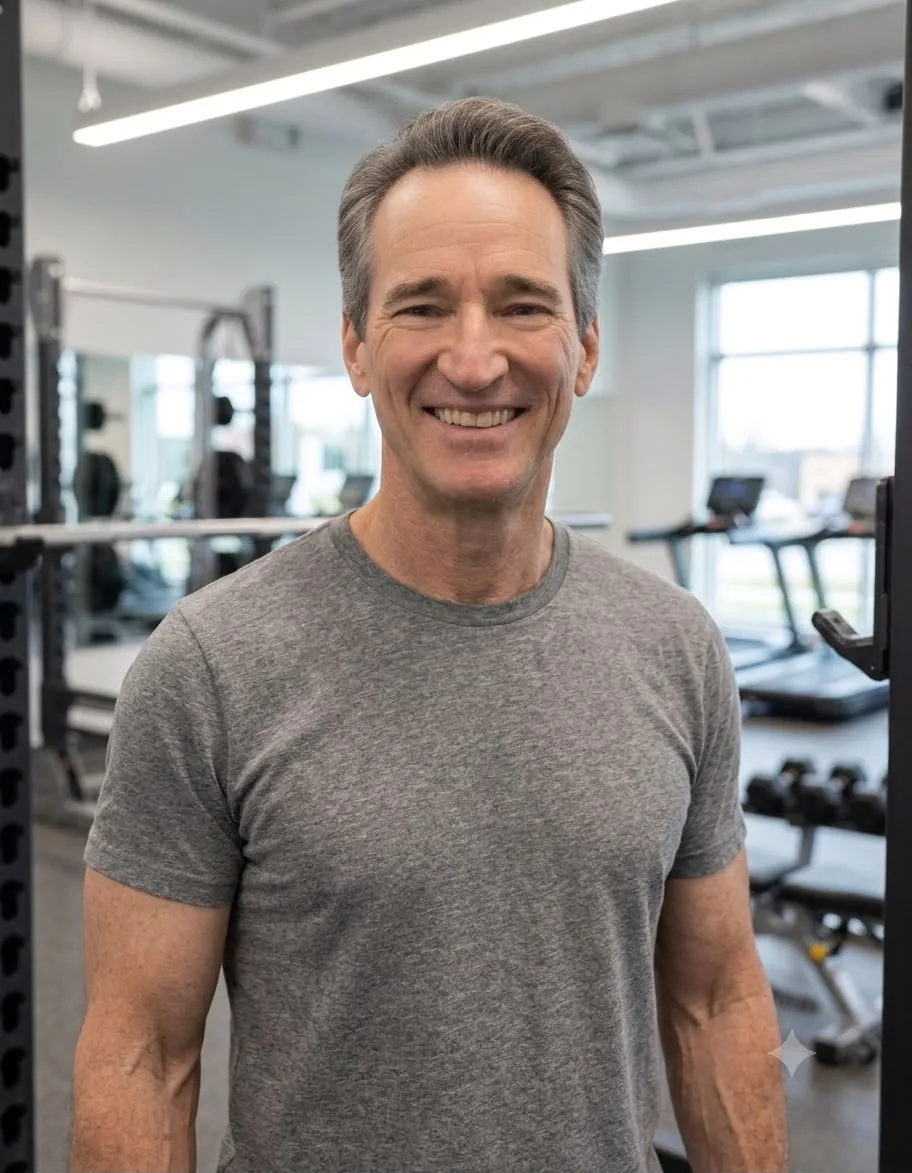
Coach Clay
Clay is the head coach at White Gorilla Fitness and has spent years coaching everyday adults, including a large over-50 community, through strength, mobility and getting back to moving well. He writes the programming behind Silverback Strong Online and filmed the movement library it runs on.