
Strength Training After 50: The Beginner's Guide
Strength training after 50 is one of the most valuable things you can do for how you move, feel, and stay independent, and it is safe for most beginners when you start light and progress gradually. The goal is not to lift like a 25 year old. It is to rebuild the muscle, balance, and joint control that quietly fade with age. Two to three short sessions a week, built around a handful of basic movements, is enough to see real change. Below is why lifting becomes non-negotiable in your 50s and beyond, a simple joint-friendly weekly template, and exactly how to begin without hurting yourself.
- Muscle loss is not just cosmetic. Research generally shows inactive adults lose roughly 3 to 8% of muscle per decade after 30, and that loss speeds up after 50 unless you push back with resistance training.
- You only need 2 to 3 sessions a week of 30 to 45 minutes to make meaningful progress as a beginner.
- Start with movement patterns, not machines or maxes: squat, hinge, push, pull, carry, and one balance drill.
- Progress by small, boring steps. Add a little weight or one more rep only when your current sets feel controlled.
- Soreness is normal, sharp joint pain is not. When in doubt, scale the range of motion or the load, and talk to your physician before starting if you have any health concerns.
Why Strength Training After 50 Is Non-Negotiable
After 30, adults who stay inactive tend to lose muscle steadily, and research generally shows this runs roughly 3 to 8% per decade. That loss accelerates in your 50s and 60s. Less muscle means a slower metabolism, weaker bones, poorer balance, and a harder time doing everyday things like carrying groceries in from the car or getting up off the floor.
Resistance training is the most direct way to slow and even reverse that trend. When you challenge a muscle against a load, your body responds by rebuilding it stronger. Over weeks, that shows up as steadier balance, easier stairs, better posture, and more confidence in your own body.
This is not about vanity or chasing a number on the bar. It is about protecting your independence for the next 20 or 30 years. Cardio like walking is wonderful for your heart, but walking alone will not rebuild the muscle you are losing. Strength work is the piece most people over 50 are missing.
A Joint-Friendly Weekly Template You Can Actually Follow
You do not need a complicated split. For most beginners, two or three full-body sessions per week, with a rest day in between, covers everything. A simple week might look like Monday, Wednesday, and Friday for training, with easy walking on the days between.
Build each session around six patterns your body uses in real life: a squat (sitting down and standing up), a hinge (picking something up from the floor), a push (pressing away from you), a pull (rowing toward you), a carry (holding weight and walking), and one balance drill like standing on one foot near a counter. Do 2 to 3 sets of 8 to 12 reps for the main moves, resting a minute or two between sets.
Keep it joint-friendly by choosing versions that never force you into pain. Box squats to a sturdy chair, dumbbell presses instead of heavy barbell work, and cable or band rows are all gentle on knees, shoulders, and lower backs that have some miles on them. Warm up for five minutes first with easy movement so your joints are ready.
How to Start Safely as a Complete Beginner
Start lighter than you think you need to. Your first two weeks are for learning the movements and letting your tendons and joints adapt, not for testing your limits. If you can do all your reps with clean form and could have done two or three more, you have picked the right weight to begin.
Learn to tell the difference between good and bad discomfort. General muscle soreness a day or two after training is normal and expected. Sharp, pinching, or joint-centered pain is a signal to stop, reduce the range of motion, or lower the weight. Never push through that kind of pain.
If you have high blood pressure, heart concerns, joint replacements, osteoporosis, or any other health condition, talk to your physician before you begin, and mention that you are starting a resistance program. A quick conversation up front lets you train with confidence instead of worry. This is general wellness guidance, not medical advice.
Progress Slowly, and Let Recovery Do Its Job
The most common beginner mistake is adding weight too fast. Muscle can adapt quickly, but tendons, ligaments, and joints take longer. Use small, boring increases: add a couple of pounds or one extra rep only once your current sets feel genuinely controlled for two workouts in a row.
Recovery is where the actual gains happen. Aim for a rest day between strength sessions, prioritize sleep, and eat enough protein to give your body the raw material to rebuild. Most people over 50 do better spreading protein across the day, with some at every meal.
Consistency beats intensity every time at this stage. Three steady, moderate sessions a week for six weeks will take you far further than two brutal sessions that leave you too sore to come back. Slow and repeatable wins.
Fueling and Support
Food does not need to be complicated. Build most meals around a palm-sized portion of protein, plenty of vegetables, and a moderate serving of quality carbs. If you are considering protein powders or supplements, treat them as convenience, not magic, and check with your physician first, especially if you take medications.
Starting is easier with structure and a coach watching your form. That is exactly what our Silverback Strong program at White Gorilla Fitness is built for: a coached 6-week strength, mobility, and balance program designed for adults 45 and up, in small groups kept deliberately small, with weekly one on one check-ins and progress assessments so you can see your progress. Sessions run early morning, midday, and evening, so there is a time that fits your schedule.
Whether you train with us with us or set up a corner of your living room, the principles are the same. Move through the basic patterns, start light, progress slowly, and show up consistently. Your future self, the one still carrying groceries and playing on the floor with grandkids, will thank you for starting now.
Frequently asked questions
Is it too late to start strength training after 50?
No. Research generally shows that adults in their 50s, 60s, and beyond can build meaningful strength and muscle when they train with resistance consistently. Your body still responds to the right stimulus at any age. The key is to start with light loads, focus on good form, and progress gradually. Many people see noticeable improvements in balance, energy, and daily function within the first several weeks.
How many days a week should someone over 50 lift weights?
For most beginners, two to three full-body sessions per week is ideal, with at least one rest day between sessions. Each workout can be 30 to 45 minutes. This gives your muscles enough stimulus to grow while leaving your joints and tendons time to recover. On off days, easy walking or gentle mobility work is a great complement without interfering with recovery.
Will strength training hurt my joints or make arthritis worse?
When done correctly, strength training generally supports joint health rather than harming it, because stronger muscles help stabilize and protect the joints around them. The trick is choosing joint-friendly versions of each exercise, staying in a pain-free range of motion, and never pushing through sharp pain. If you have arthritis, a joint replacement, or ongoing joint issues, talk to your physician before starting and consider working with a coach who can adjust movements for you.
What equipment do I need to start strength training at home after 50?
You can start with very little. A pair or two of adjustable or light dumbbells and a sturdy chair cover most basic movements: squats to the chair, presses, rows, and carries. Resistance bands are inexpensive, gentle on the joints, and easy to store. As you get stronger you can add heavier dumbbells. You do not need a full home gym to make real progress in the first several weeks.
How soon will I see results from strength training after 50?
Most people notice improvements in energy, balance, and how everyday tasks feel within the first two to four weeks, even before visible muscle changes. Strength on your basic lifts often climbs steadily over the first six weeks as your nervous system learns the movements. Visible changes in muscle tone typically follow with consistent training and adequate protein. Tracking simple markers, like how an assessment changes or how many reps you can control, helps you see progress you might otherwise miss.
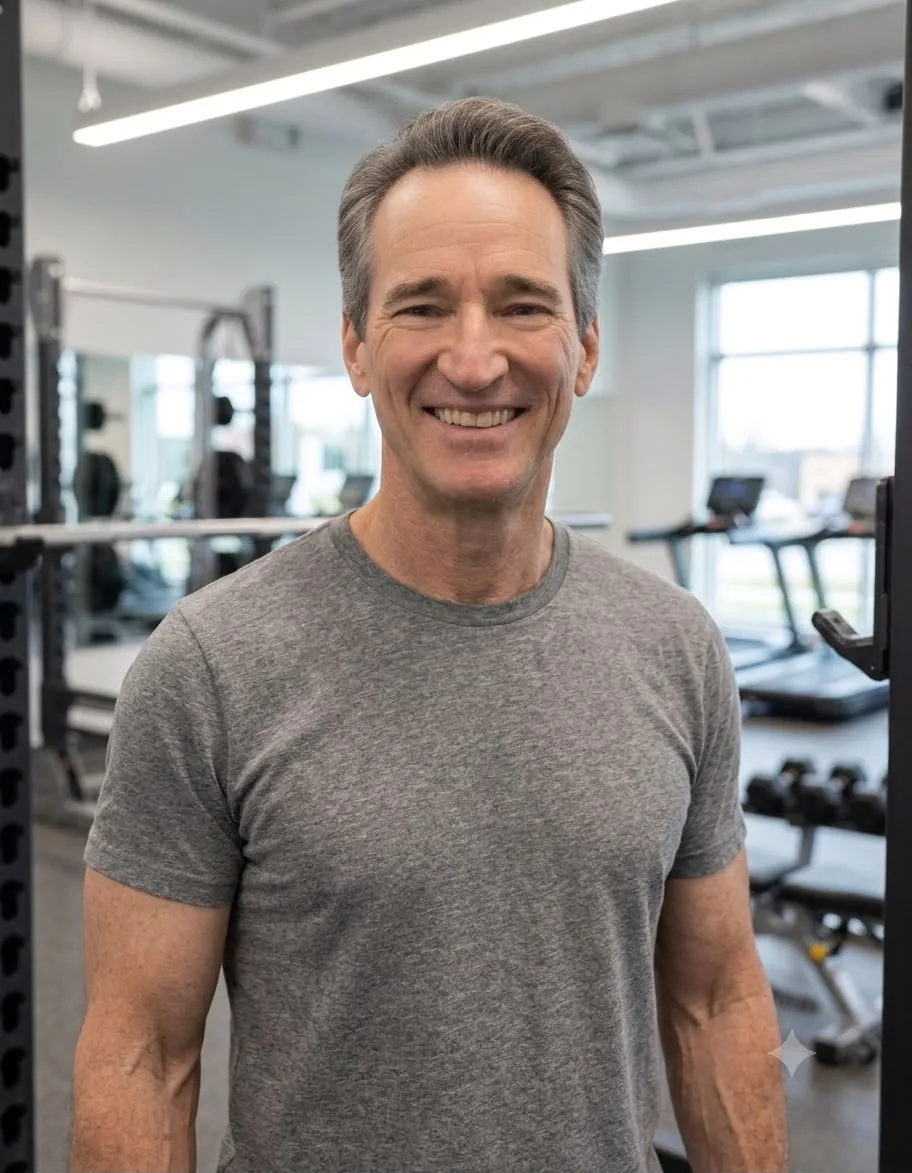
Coach Clay
Clay is the head coach at White Gorilla Fitness and has spent years coaching everyday adults, including a large over-50 community, through strength, mobility and getting back to moving well. He writes the programming behind Silverback Strong Online and filmed the movement library it runs on.